

Political Communication Coaching in Kenya: Costs, What’s Included, and What to Expect
This is not a politics class. Political communication coaching in Kenya builds the speaker behind the candidacy: the voice, the presence, the composure, and the person voters actually hear when they decide whether to trust you. This guide covers what it involves, what it costs, and whether there is enough time before 2027.

- 01 What political communication coaching is
- 02 What it is not
- 03 The three things it builds
- 04 What it costs in Kenya
- 05 What to expect from structured coaching
- 06 Timeline to 2027
- 07 How to evaluate a coach before committing
- 08 What happens in a first session
- 09 Geography and remote options
- 10 Frequently asked questions
Most aspirants who search for political communication coaching in Kenya are looking for something practical: help with their speeches, their interview answers, their debate composure. That is the right instinct. But the thing most people underestimate is how much of that work is not about the speeches at all.
The speeches are the output. The coaching builds what produces them.
Before You Book Any Coaching, Know Your Starting Point
The most common mistake in choosing political communication coaching in Kenya is enrolling without understanding what you are actually dealing with. The right coaching for a candidate whose challenge is vocal presence is different from the right coaching for a candidate who speaks well but loses composure under challenge. This diagnostic takes 5 minutes and identifies the root cause of your specific gap. It is the same diagnostic Sprout coaches use to open every first session.
What political communication coaching in Kenya actually is
Political communication coaching in Kenya is structured, personalised work on how you communicate as a candidate. Not what your campaign says. How you, as a person, speak, carry yourself, hold a room, recover from a hostile question, and deliver a message that voters can actually hear and believe.
It is built on the same methodology used in executive and professional coaching, but calibrated specifically for the contexts Kenyan political aspirants face: outdoor rallies, televised debates, hostile media interviews, barazas, parliamentary sessions, and the full range of settings where a candidate’s voice and presence are the campaign’s most consequential asset.
The work happens in sessions, typically 60 to 90 minutes each, with a structured progression across three things: who you are as a communicator, how your voice and physical presence carry that, and how your words land in the specific political settings you are preparing for. Between sessions, video assignments build the habit of self-observation. Coach feedback closes the gap between what the aspirant intends and what the audience actually receives.
What political communication coaching in Kenya is not
This matters because there is real confusion in the market, and that confusion leads aspirants to invest in the wrong thing.
Political communication coaching is not a politics class. It does not teach you what positions to take, which policies to champion, or how to navigate party dynamics. Those are political questions. This is a communication question. The coaching assumes you already have the politics. It builds the person who is going to communicate those politics to voters in a way that earns trust, holds attention, and survives pressure.
It is also not:
- Speechwriting. A speechwriter produces words for you to say. Coaching builds your ability to find your own words, under pressure, in settings where no script helps. These are different problems. If you want to understand why, read our guide on political speechwriters vs communication coaches.
- Image management. Coaching does not polish a performance you then deliver to voters. It builds a more complete version of the communicator you already are, so that what voters see is the real candidate at their most capable, not a managed version of them.
- A shortcut. Eight weeks of serious coaching will produce measurable change. It will not produce a speaker who has been doing this for twenty years. Anyone who promises transformation in a weekend is selling a formula, not a development.
- Only for weak speakers. The aspirants who get the most from political communication coaching in Kenya are often the ones who already speak well but have hit a ceiling: they are capable but not yet compelling, confident in some rooms and uncertain in others, strong on content but losing rooms on delivery.
The three things political communication coaching builds
The Sprout coaching methodology, which underpins the Becoming an Effective Political Speaker programme, organises its work around three pillars. For a political aspirant, each one has a direct translation.
For a political aspirant, Naturalness is the work of finding and owning your authentic speaking identity, not performing a version of a speaker you admire, but growing into the most capable version of who you already are. This is the layer that most generic public speaking training skips entirely. It is also the layer that separates candidates voters trust from candidates voters merely acknowledge.
Voice work in a political context goes beyond the boardroom. It addresses outdoor projection for barazas and rallies, on-camera calibration for television and social media, and the vocal composure that holds steady when a journalist is hostile or an opponent is on the attack.
Words work in a political context is about message discipline under pressure, the Persuasion Formula applied to Kenyan voter realities, and the structural frameworks, including the Live Broadcast Framework and the Objection Transformation Framework. These give an aspirant a reliable way to communicate clearly in settings they cannot fully predict or control.
What political communication coaching costs in Kenya
Cost in this market is driven by three variables: format (group versus individual), duration (sessions versus programmes), and the specificity of the coaching to political communication contexts. Here is an honest breakdown of what each tier buys.
Entry level: one-day workshops and short courses
FoundationRange from KES 5,000 to KES 25,000 per participant. Group settings, 10 to 40 participants, generic public speaking curriculum. Useful as an introduction to communication concepts. Not structured for political contexts and not sustained enough to produce the behavioural change political communication demands.
Best for: An aspirant who has never done any formal communication training and needs a starting point before moving into structured coaching.
Mid-level: group coaching programme (multi-week)
StructuredRange from KES 30,000 to KES 60,000 for a 6 to 8 week programme. Small group formats (6 to 15 participants), structured curriculum, repeated practice, and coach feedback. Better than a single workshop because progression builds over time. Political context varies significantly by provider. The Sprout group BEPS programme runs at KES 40,000 for a maximum of 6 participants.
Best for: An aspirant who wants structured, sustained learning with the added benefit of practising alongside peers in a similar situation.
Top level: 1-on-1 political communication coaching
Best for 2027Range from KES 60,000 to KES 120,000 for a structured programme of 6 to 10 sessions. Fully personalised to the aspirant’s specific gaps, communication context, and 2027 timeline. Includes video feedback, session-by-session progression, and coaching that addresses Naturalness, Voice, and Words in the specific political settings the aspirant is preparing for. The Sprout 1-on-1 BEPS programme runs at KES 85,000 for 8 structured sessions.
Best for: Any declared aspirant at ward, constituency, county, or national level who is serious about 2027 and has the time to invest in the work.
A campaign budget at ward level in Kenya commonly runs into hundreds of thousands of shillings. At constituency or county level, campaign budgets regularly exceed KES 5 million. Communication coaching is the investment that multiplies the return on every other campaign spend, because the candidate is the campaign’s most important medium. A rally costs money. A candidate who cannot hold a crowd wastes it.
What to expect from structured political communication coaching in Kenya
Knowing what you are paying for requires knowing what actually happens across a programme. Here is what structured political communication coaching in Kenya produces, session by session.
Sessions 1 and 2: Diagnosis and foundation
The first sessions establish the baseline. The coach identifies the specific patterns that are limiting the aspirant’s communication impact: which vocal suppressor is most active, where confidence is weakest across political settings, whether the primary block is identity-level or skill-level. Video review begins here. The aspirant sees themselves as the audience sees them, often for the first time. This is uncomfortable and essential.
Sessions 3 and 4: Voice and physical presence
Dedicated work on the physical communication skills: diaphragmatic breathing for outdoor scale, vocal range and projection, body-voice connection, composure under simulated pressure. For political aspirants, this includes calibration for both rally delivery and on-camera presence, which make different demands on the same voice.
Sessions 5 and 6: Political intelligence layer
Message framing for Kenyan political audiences. The Persuasion Formula applied to rally and debate settings. Vernacular code-switching. Media interview preparation including the Live Broadcast Framework and the Objection Transformation Framework for hostile questions. These sessions bring the foundational work into direct contact with the specific communication contexts the aspirant faces.
Sessions 7 and 8: Integration and consolidation
Full simulations of the aspirant’s actual upcoming contexts: a mock rally address, a mock hostile media interview, a mock debate exchange. Video review at this stage shows the distance covered from session 1. The aspirant leaves with self-awareness, frameworks they can deploy independently, and the muscle memory of having performed under pressure repeatedly.
Is there enough time before 2027?
This question comes up in every initial conversation. The short answer: yes, for most aspirants. The longer answer depends on where you are starting from and which contexts you are preparing for.
Most aspirants notice a measurable shift in vocal confidence and composure within the first three sessions. The change is real but not yet automatic; it requires conscious application.
By session 8, the patterns that coaching built have become more automatic under pressure. An aspirant who was losing rooms in weeks 1 to 3 is now holding them. This is the level most campaigns need from their candidate before the 2027 cycle peaks.
Full mastery of political communication takes years of real-world performance. Coaching accelerates the development curve significantly, but it is not a shortcut to two decades of experience. The goal of a pre-election programme is not mastery. It is a reliably capable, genuinely authentic communicator by the time it matters most.
If 2027 is 12 to 18 months away, starting now is not premature. It is exactly right. The habits built in structured coaching need time to consolidate before they are tested under real campaign pressure. An aspirant who finishes their programme 6 months before election day has time to practise in real settings before the highest-stakes moments arrive.
How to evaluate a political communication coach before committing
Not every coaching provider in Kenya who uses the word “political” has genuine political communication experience. Here are the questions that reveal the difference.
- Can they describe their methodology? Not their testimonials. Their framework. How does the work progress? What is the underlying model? A coach who cannot articulate this is working from intuition alone.
- Do they have specific political context experience? Coaching professionals and coaching politicians are related but different skills. Ask directly whether they have prepared candidates for debates, media appearances, or rally delivery in Kenya specifically.
- Does their programme include video feedback? This is non-negotiable in serious political communication coaching. If the coach describes everything they will tell you and nothing you will watch of yourself, the most important tool is missing.
- What results can they point to? Not vague testimonials about confidence. Specific communication improvements in real political settings. The closer the evidence is to actual political performance, the more meaningful it is.
- Are they honest about limits? A coach who tells you they can make you a great speaker in two days is selling a formula. A coach who tells you what is realistic in the time you have, and what will take longer, is telling you the truth. Choose the one who tells you the truth.
What happens in a first political communication coaching session
A first session in genuine political communication coaching in Kenya is not an introduction. It is a diagnosis.
Before the session, a credible coach will ask you to complete a self-assessment tool, review a recording of you speaking if one is available, and share any context about the specific political settings you are preparing for. This is not paperwork. It is the foundation of personalised work.
In the session itself, the coach will ask you to speak, on camera, in conditions that are as close to your real political communication contexts as the session allows. They will watch the recording with you. They will identify the two or three patterns that are most limiting your impact. They will tell you what the programme will address, in what order, and why.
You leave the first session with more clarity about your specific starting point than most aspirants have about themselves after years of speaking. That clarity is the beginning of the work.
Political communication coaching built for Kenya’s 2027 cycle
The Becoming an Effective Political Speaker programme at Sprout Life Skills is 8 structured sessions of 1-on-1 political communication coaching in Kenya, built around the three pillars of Naturalness, Voice, and Words. It is not a politics class. It builds the speaker behind the candidacy. Available in Nairobi and remotely for aspirants based anywhere in Kenya. KES 85,000 for the 1-on-1 programme. KES 40,000 for the group programme (max 6).
Learn more or enquireIs Something Quieter Getting in the Way?
Some aspirants delay committing to political communication coaching in Kenya not because of budget but because of a quieter concern: whether they will be able to do the work, or whether something fundamental about them can actually change. That concern has a name and a pattern. If you have had that thought, this check takes 3 minutes and tells you what you are dealing with.
Political communication coaching in Nairobi, Kisumu, Eldoret, and remotely
Most political communication coaching providers in Kenya are based in Nairobi. This is a practical limitation for aspirants preparing campaigns in Kisumu, Eldoret, Mombasa, Nakuru, or any county outside the capital.
Remote coaching via video call, with video assignment submission and asynchronous feedback, is a full substitute for in-person sessions when the provider’s platform supports it properly. The research on coaching effectiveness does not show a meaningful difference between high-quality remote coaching and in-person coaching. What matters is the methodology, the video feedback loop, and the consistent progression across sessions.
Sprout Life Skills delivers the Becoming an Effective Political Speaker programme remotely to aspirants based across Kenya. The video-based self-review methodology that is central to the programme works as well over a video call as it does in a Nairobi studio. The coach sees the same signal the camera sees. The aspirant reviews the same footage. The work is the same.
Political communication coaching in Kenya is not about teaching you to be a politician. You already are one. It is about building the version of you that voters can hear clearly, trust genuinely, and follow with confidence. The politics is yours. The coaching builds the person who delivers it.
Frequently asked questions about political communication coaching in Kenya
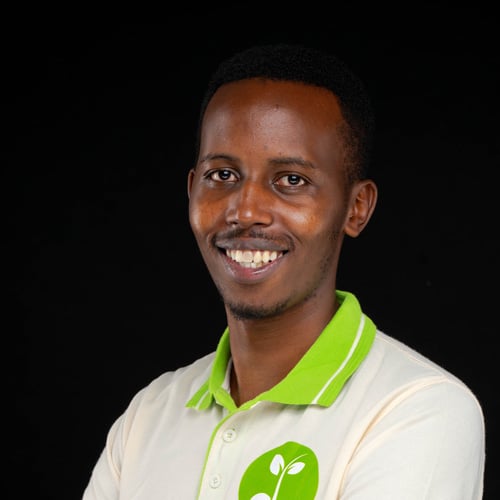
Gikuyu Muchai
Gikuyu Muchai is Kenya’s leading public speaking coach and the founder of Sprout Life Skills. For over nine years he has coached professionals, executives, and political aspirants across East Africa. He is the creator of the Sprout Model and the designer of the Becoming an Effective Political Speaker programme.
Read full bio · Becoming an Effective Political Speaker · Executive Coaching
Sources and further reading
- ICF (2023). Global Coaching Study Executive Summary. International Coaching Federation. View report
- Mühlberger, M. D., & Traut-Mattausch, E. (2016). Comparing the effectiveness of individual coaching, self-coaching, and group training. Frontiers in Psychology, 7, 629. View paper
- Sprout Life Skills. Becoming an Effective Political Speaker programme. sprouts.co.ke/becoming-an-effective-political-speaker