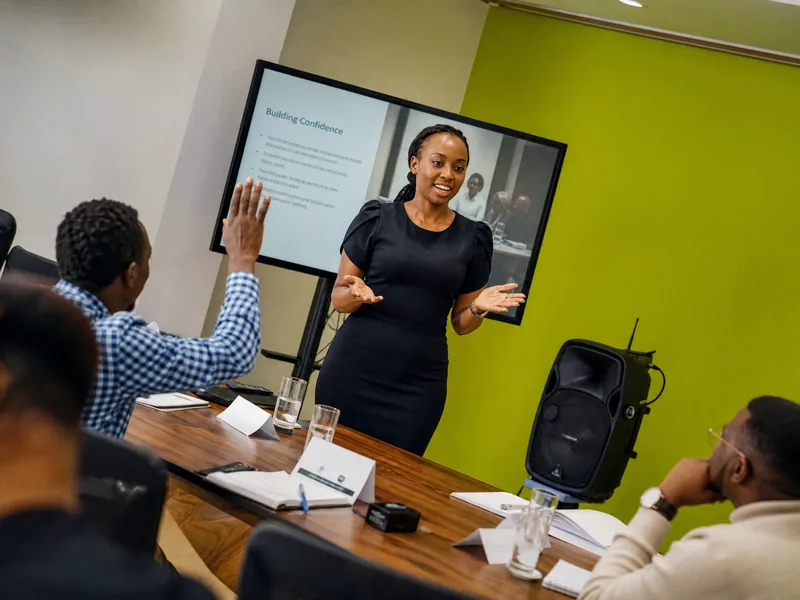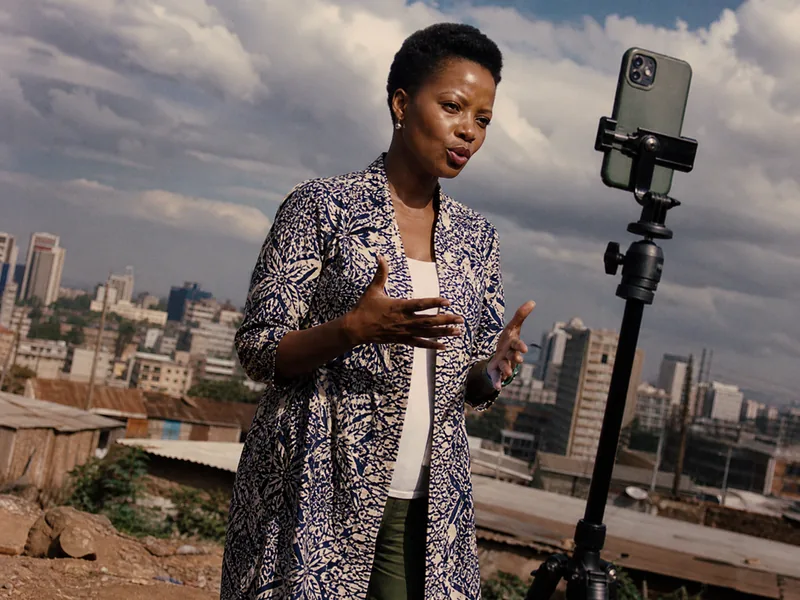

A political speechwriter in Kenya writes the words a candidate will say; a communication coach helps the candidate deliver any words, scripted or not, with confidence. Most aspirants who look for a speechwriter want a crowd, a journalist or a voter to believe them, and that depends mostly on delivery and composure in unscripted moments. A speechwriter helps with formal set pieces, a coach helps everywhere else, and when an aspirant wants both, coaching works best first.
Key points
- A political speechwriter produces text, such as a rally address or a statement; a communication coach develops the candidate who delivers it.
- Speechwriters add value for formal set pieces, message structure and saving a busy candidate time.
- A script cannot help when the text runs out: hostile questions, hecklers, debate rebuttals and crowds that are deciding whether to listen.
- Many aspirants who look for a speechwriter are mostly unsure whether their own voice will hold up in front of an audience, and coaching works on exactly that.
- When an aspirant uses both, coaching first and speechwriting second keeps the speeches in the candidate’s own voice.
What is the difference between a political speechwriter and a communication coach?
A political speechwriter produces a document, and a communication coach develops a person. A speechwriter’s work is a rally address, a debate opening, a media statement or a eulogy. A coach’s work is a candidate who can find the right words under pressure, hold a crowd without a script, stay steady in a hostile interview and come across as sincere.
The two services solve different problems. Here is how they compare:
- Polished written text: this is the speechwriter’s main work; a coach may help you shape your message but does not write your speeches.
- Voice and delivery: a coach works on these; a speechwriter does not.
- Unscripted moments and hostile questions: a coach prepares you for them; a script cannot.
- Composure under pressure: a coach builds it through practice.
- Your identity as a speaker: a coach helps you speak as yourself; a speechwriter writes in a voice you then have to grow into.
- What you get: a speechwriter gives you a script you can use straight away; a coach gives you a skill that stays with you when the script runs out.
What does a political speechwriter do well?
Speechwriters have a legitimate role in Kenyan campaigns. A skilled speechwriter is most useful in three situations.
1. Formal set-piece occasions
A political speechwriter adds value for formal occasions where the exact words will be published and studied, such as a maiden speech in the National Assembly, an address at a state function or a keynote at a party event. In these settings, precise language matters as much as delivery.
2. Message structure
A good speechwriter thinks about structure, framing and how a speech builds. That makes speeches clearer, as long as the candidate can then deliver them convincingly.
3. Saving time
An aspirant campaigning across a constituency does not always have hours to draft a new address for each event. A writer who knows the campaign’s positions can prepare material quickly.
What can a political speechwriter not do?
A political speechwriter cannot help once the script runs out, and in a campaign the script runs out often. A hostile journalist does not follow your notes. A heckler does not wait for your prepared answer. A debate opponent’s strongest point is rarely the one you wrote a rebuttal for.
A large crowd deciding in the first minutes whether to stay and listen is responding to whether it believes the person in front of it, more than to how well the sentences were crafted. A speechwriter cannot build the composure that holds under challenge, the vocal presence that carries over a crowd or the awareness that lets you adjust when the mood shifts.
Why do many Kenyan aspirants look for a speechwriter when they need a coach?
When an aspirant searches for someone to write their speeches, one of three feelings is usually behind it. Naming which one applies tells you what kind of help you need.
4. “My words are not good enough”
Some aspirants believe better phrasing would change how audiences respond. Sometimes that is true. In Sprout’s coaching experience, the words are often fine, and the delivery is what needs work.
5. “I do not know how to say this”
Sometimes the message itself is unclear or unfinished. That is a writing and strategy problem, and a good speechwriter or communications adviser can help. It is a different problem from delivering a clear message well.
6. “I do not trust my own voice in front of people”
This is the feeling a speechwriter cannot reach. The candidate reads the script well in private, then stands in front of the crowd and the voice changes, and the audience can tell the words were borrowed. In Sprout’s coaching experience, this is the most common reason behind a speechwriter search, and it takes honesty to name.
Two kinds of gaps. One is a skills gap: projecting outdoors, organizing an answer in 90 seconds, recovering from a stumble. These can be learned fairly quickly. The other is a gap in self-belief: doubt about whether you have the right to take up space, or whether your natural voice is strong enough. A speechwriter addresses neither. Coaching works on both together.
What do voters notice when a candidate reads someone else’s words?
Kenyan voters have listened to many campaigns, and many can tell a candidate who is speaking from one who is performing. When the phrases are polished but the delivery is flat, or the eyes are reading instead of believing, audiences sense a gap they may not be able to name, and it shows up as distrust.
What voters want from leaders goes well beyond good phrasing. In an Infotrak survey released in July 2026, the largest share of respondents (41%) said they judge elected leaders mainly on whether they deliver their promises, followed by transparency and accountability (35%). Whether a candidate means what they say shows most clearly in unscripted moments: the baraza where someone shouts a hard question, the radio interview where the host asks the same question four ways, the rally where the crowd’s mood shifts. Those moments cannot be scripted, and they can be prepared for.
What does communication coaching give a candidate?
Sprout’s practice-based model, the Sprout Model, coaches three things: Naturalness, Voice and Words. In political coaching, each one shows up in practical ways.
7. Naturalness: speaking as yourself
Naturalness means coaching starts with how a candidate already speaks and builds from there, without asking them to copy a speaker they admire or perform authority. When this work is done, voters hear a person speaking from conviction instead of reading from somewhere else.
8. Voice: being easy to hear
Voice covers pace, pauses, volume and body language, practiced until they hold up when nerves arrive. For a political speaker that includes outdoor projection at a baraza or rally, a steady voice when a journalist’s third question lands harder than the first two, and the pause before a key point. These are physical habits built through practice.
9. Words: being easy to follow
Words means saying the main point early, organizing the rest and choosing plain words people remember. In politics, that becomes the ability to answer any question and still return to your core message, and to say something clearly in the short time a political setting usually allows. With enough command of your own ideas, the words come without reaching for someone else’s.
Try this: ask a friend to put three unexpected questions to you about your main campaign issue. Record your answers, then check whether each one stated your main point within the first two sentences.
Can an aspirant use both a speechwriter and a communication coach?
An aspirant can use both a speechwriter and a communication coach, and the order matters. Coaching first helps the candidate understand their own voice, message and style of speaking. A speechwriter can then extend and polish what is already there, and the candidate delivers well-crafted speeches in their own voice.
When the speechwriter comes first, the writer’s phrasing and rhythms can take over the candidate’s style, and the candidate then has to work against a borrowed voice. That is harder to undo than most people expect.
When should an aspirant get communication coaching?
Coaching helps most when an aspirant has time to practice before campaign events, debates and interviews pick up ahead of the 2027 general election. Political Communication Coaching at Sprout Life Skills does not write your speeches; it helps you deliver your own. It works with aspirants and their teams, one to one. Through Build Your Coaching Plan, you answer questions about your speaking situation and goals, and Sprout shares a program outline and an estimate. You can also book a free consultation.
Frequently asked questions: political speechwriter vs communication coach in Kenya
Should I hire a political speechwriter for my campaign in Kenya?
You should hire a political speechwriter in Kenya if you have formal set-piece occasions where polished written text matters, such as a party keynote or an official address. For rallies, debates, interviews, barazas and other unscripted moments, communication coaching helps more, because those moments depend on delivery.
What is the difference between a political speechwriter and a communication coach?
The difference between a political speechwriter and a communication coach is that a speechwriter produces text for you to deliver, while a coach develops your ability to communicate clearly and sincerely with or without a script. The speechwriter’s help ends when the script runs out; the coach’s work stays with you.
Can I have both a speechwriter and a communication coach?
You can have both a speechwriter and a communication coach, and it works best with coaching first and speechwriting second. Once you know your own voice and message, a writer can polish what is already there instead of replacing it with their style.
Why do voters trust some politicians more than others when their speeches are equally polished?
Voters often trust some politicians more than others with equally polished speeches because they respond to how sincere the speaker seems, as well as to the words. Borrowed words delivered without conviction create a gap audiences sense as distrust, and unscripted moments show the difference most clearly.
Where can I find political communication coaching in Kenya?
Sprout Life Skills offers one-to-one Political Communication Coaching at Zarafa in Kilimani, Nairobi, online or in your county, for aspirants and their teams, planned around each speaker through Build Your Coaching Plan. Fees depend on the plan, and you can book a free consultation or email [email protected].