Political public speaking training in Kenya comes in five main formats: one-day workshops, self-paced online courses, group programs over several weeks, one-to-one general speaking coaching, and one-to-one coaching built for political leaders. The right choice depends on your starting point and the settings you face, such as rallies, debates and media interviews. Look for practice in those settings, recordings of yourself with feedback, steady sessions over time and a coach who knows Kenyan politics.
Key points
- Start by knowing your own starting point, because two aspirants in the same program can need very different things.
- Political public speaking training in Kenya should cover outdoor rallies, debates, hostile interviews, language switching and audiences who start out doubtful.
- In a study with university students, individual coaching helped people reach their goals more than group training, group training was better for learning, and self-coaching alone was not enough (Mühlberger and Traut-Mattausch, 2016).
- Watching recordings of yourself under pressure, with a coach’s feedback, is one of the most useful parts of political speaking training.
- Be careful with promises of a two-day change, large groups and programs with no political content.
- Remote coaching is a workable choice for aspirants outside Nairobi.
What should you know before comparing political public speaking training in Kenya?
Before comparing political public speaking training in Kenya, understand your own starting point. One aspirant needs a voice that carries outdoors. Another needs to stay calm when challenged. A third needs to frame a message for a particular community. Generic training treats all three the same, while good political training starts by finding out what you need.
Try this: write down the three speaking moments that worry you most before the 2027 general election, such as a first big rally or a TV interview. Take that list to every provider you speak to.
How is political public speaking training different from a general course?
Political public speaking training in Kenya is different from a general course because it prepares you for settings that most courses never touch:
- Outdoor rallies with large crowds, uncertain sound systems and weather.
- Televised debates, where split screens show your face while your opponent speaks.
- Hostile media interviews with journalists whose job is to press you.
- Audiences who start out doubtful about political promises.
- Switching languages between Kiswahili, English and local languages in one address.
- Recovering in public when something goes wrong in front of a large audience.
A general public speaking course builds a useful foundation in structure, nerves, voice and engaging an audience. It is a good start and was not designed for these settings.
5 political public speaking training formats available in Kenya
1. One-day or weekend workshops
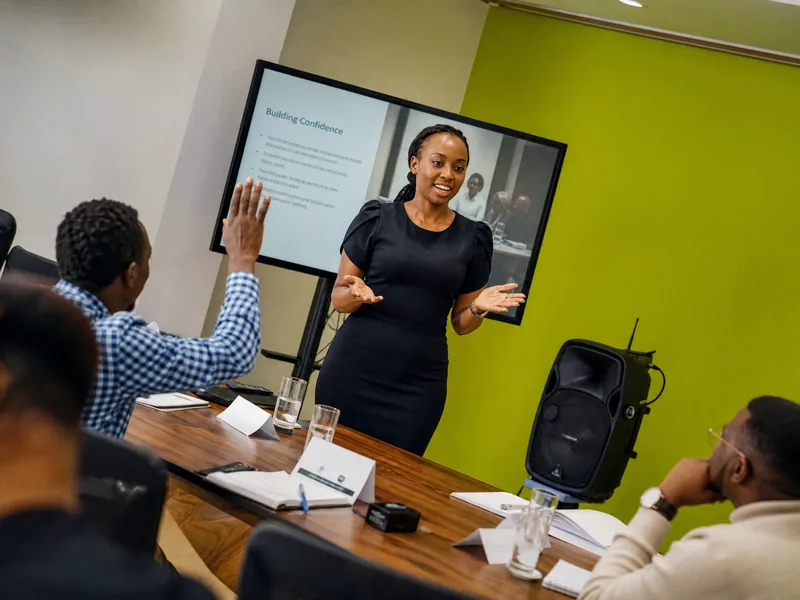
One-day public speaking workshops are the most widely available format in Kenya, run by training companies, NGOs and professional bodies for mixed groups. They introduce the basics and give a first chance to practice with feedback, at a lower cost.
A single day cannot build habits that hold under debate pressure or the outdoor voice a rally needs. A workshop suits someone with no training at all who wants a starting point.
2. Self-paced online courses
Self-paced online public speaking courses build knowledge and can be taken anywhere in Kenya, at your own pace. Most are made for corporate or general audiences.
They give no live feedback and no Kenyan political content. In a study by Mühlberger and Traut-Mattausch (2016), self-coaching, doing exercises without a coach, was not enough for high goal attainment. Online courses suit background learning alongside other preparation.
3. Group programs over several weeks
Group public speaking programs run over several weeks offer structure, repeated practice in front of others and the support of a cohort. They build skills more steadily than a one-day workshop.
A shared curriculum moves at the group’s pace, so it cannot spend long on one person’s patterns. Group programs suit aspirants who want structure and peer practice, ideally with individual sessions for their own goals.
4. One-to-one general speaking coaching
One-to-one public speaking coaching is built around one person and can respond to what they need from session to session. In the same study, individual coaching helped participants reach their goals more than group training did, while group training was better for building knowledge.
A general speaking coach may not know Kenyan political settings: debate formats, language dynamics, doubtful audiences and the media. It works well when the coach has that political experience.
5. One-to-one political communication coaching
One-to-one political communication coaching is built for leaders in Kenyan politics and covers rallies, debates, media interviews, message framing and language switching. Recordings of your own speaking, with feedback, are a central part of it.
It asks for more of your time than other formats and usually costs more, and it depends on a coach who knows both communication and politics. It suits declared aspirants and elected leaders at ward, constituency, county or national level.
What must political public speaking training include?
Political public speaking training in Kenya should include these six things. A program without them may still be a good foundation, but it is general communication training:
- Outdoor voice and delivery for rallies and barazas: breathing, pace, volume and pauses in open air.
- Debate practice under challenge: hostile questions, interruptions and recovering from stumbles.
- Message framing for Kenyan voters: story before figures, character before policy, examples from specific communities.
- Language guidance: honest coaching on when and how much to use local languages without it backfiring.
- Media preparation: on-camera delivery, hostile interviews and short, clear answers.
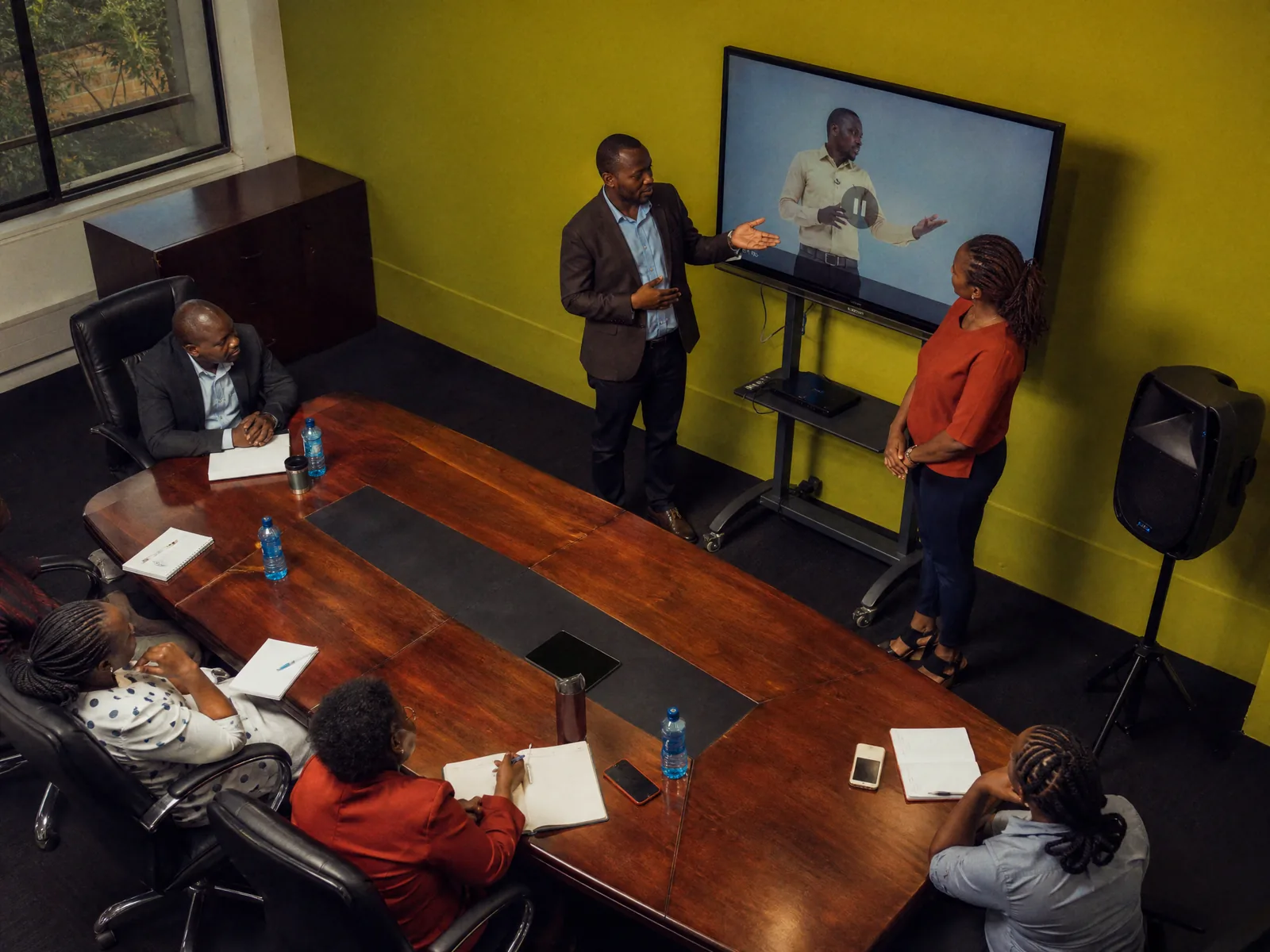
- Recordings of yourself: watching your own speaking under pressure, with feedback, so you see what audiences see.
What warning signs should you watch for?
Watch for these six warning signs when choosing political public speaking training in Kenya:
- Promises of a two-day change. Speaking well under pressure is a physical habit that takes weeks of practice.
- No political content. A professional speaking course with a few political examples added is not political training. Ask to see what the political parts cover.
- No recordings or feedback. If you only hear the coach’s description of your speaking, you miss seeing it yourself.
- Large groups. In a big workshop, each person gets little time to speak and little individual feedback.
- Vague promises of confidence. Most leaders already have confidence; good training works on specific skills and on what holds that confidence back.
- No conversation about your starting point. A program that starts everyone in the same place with the same content is not built around you.
What questions should you ask a training provider?
Ask any political public speaking training provider in Kenya these seven questions before you sign up:
- What experience do you have preparing people for rallies, debates and media interviews in Kenya?
- How does your method work, and how does it progress from session to session?
- Will I watch recordings of myself, how often, and in what conditions?
- Which political settings does the training practice?
- How long does it run, and how much time will it take each week?
- What changed for people you coached in settings like mine?
- Can I do it remotely or in my county if I am outside Nairobi?
Can you get political public speaking training outside Nairobi?
Aspirants outside Nairobi can get political public speaking training remotely by video call, and some coaches will travel to the county. Most structured coaching providers are in Nairobi, which is a challenge for candidates in places such as Uasin Gishu, Kisumu or Mombasa.
Remote coaching is a workable option when it includes practice, recordings and feedback. In a study of 102 coaches by Berry and colleagues (2011), face-to-face and phone coaching showed no significant difference in the working relationship or in how well problems were resolved, which the authors call early evidence.
When is it time to look for training?
It is time to look for training when you can see your biggest speaking moments coming and still have weeks to practice before them. Political Communication Coaching at Sprout is one-to-one, with a plan built around your role and goals, at Zarafa in Kilimani, Nairobi, online or in your county. You can book a free consultation to talk through your starting point. For what affects cost and what to expect, read our guide to political communication coaching in Kenya.
Frequently asked questions about political public speaking training in Kenya
How do I choose political public speaking training in Kenya?
Choose political public speaking training in Kenya by matching it to your own starting point and the settings you face, then checking that it includes political practice, recordings with feedback, steady sessions over time and a coach with political experience. Ask each provider the same questions so you can compare them fairly.
Is online political public speaking training as effective as in-person?
Online political public speaking training can work well when it includes practice, recordings and feedback over enough sessions. One study of coaches found no significant difference between face-to-face and phone coaching, which the authors describe as early evidence.
How long does political public speaking training take?
Political public speaking training takes weeks of regular practice to build habits that hold under pressure, and the length depends on your goals and starting point. A single workshop raises awareness; steady change needs repeated practice with feedback.
What is the difference between political public speaking training and a standard public speaking course?
Political public speaking training prepares you for outdoor rallies, televised debates, hostile interviews, doubtful voters and language switching, while a standard public speaking course builds general skills such as structure, voice and managing nerves. The standard course is a useful foundation for the political work.
How do I know if a political public speaking trainer in Kenya is credible?
A credible political public speaking trainer in Kenya can describe their method, explain their experience with Kenyan political settings, include recordings and feedback, and describe what changed for people they coached. They are also honest about what cannot change in the time you have.