


We Are Raising Successful Boys. But Are We Raising Emotionally Equipped Men?
A boy learns how to score a goal.
He learns how to win a chess game.
He learns how to code, compete, and perform.
But when he is rejected by a friend, what does he do?
When he feels overwhelmed before an exam, where does he turn?
When something is hurting inside and he doesn't have the words, how does he respond?
For many boys in Kenya and across Africa, the honest answer is simple. They push it down. They go quiet. Or they act out in ways that confuse even themselves.
And it's not because something is wrong with them. It's because no one taught them what to do with those feelings.

📖 What You'll Learn in This Article
- The Gap We Don't Always See
- What Many Boys Are and Aren't Being Taught
- What Research Says About Boys and Emotional Expression
- Why Emotional Intelligence Matters for Boys Today
- What Boys Actually Need to Thrive
- How Parents and Educators Can Support Boys
- How Sprout Leadership Programs Are Helping Boys Grow
- FAQs About Emotional Development for Boys
The Gap We Don't Always See
We invest so much in our children's futures. Tutors, extracurriculars, skill-building programs. And rightly so.
But there is one area that often gets quietly overlooked. Teaching boys how to understand and express what's happening inside them.
This isn't about making boys "soft" or taking away their natural energy and drive. It's about giving them the full toolkit they'll need to navigate life as healthy, connected, emotionally aware men.
The pattern is clear across cultures and continents. When boys aren't taught to process emotions, they don't stop feeling. They just lose the tools to express it healthily.
Key Insight: Emotional intelligence isn't a "nice to have" for boys. It's a foundational life skill that shapes how they handle rejection, build relationships, lead others, and navigate pressure throughout their entire lives.
What Many Boys Are and Aren't Being Taught
In many homes and classrooms across Kenya, Nigeria, and throughout Africa, boys are encouraged toward certain strengths. Achievement. Delivering results and reaching goals. Resilience. Pushing through difficulty without complaint. Independence. Figuring things out on their own.
These are genuinely good qualities. Strong qualities. Qualities that will serve them well.
But without balance, they leave a gap.
The Skills That Often Get Overlooked
Equally important, and too rarely taught, are self-awareness (knowing what you feel and why), emotional vocabulary (being able to put feelings into words), and emotional safety (feeling secure enough to share what's going on inside).
A boy can grow up knowing exactly how to do and still not know how to feel, name, or express what's going on inside him.
That gap doesn't disappear with age. It shows up later as difficulty in relationships, trouble handling pressure at work, and a quiet sense of being disconnected from himself and the people around him.
What Research Says About Boys and Emotional Expression
This isn't just a parenting concern. It's backed by decades of psychological and developmental research.
The World Health Organization finds that men are significantly less likely to seek mental health support, yet more likely to express distress through anger, risk-taking, or withdrawal.
UNICEF's research consistently shows that emotional and social skills developed in childhood have a lasting impact on relationships, decision-making, and overall well-being throughout life.
⚠️ The Pattern Is Clear: When boys aren't taught to process emotions, they don't stop feeling. They just lose the tools to express it healthily. The feelings don't go away. They go underground.
In African contexts specifically, this gap is often even wider. Cultural expectations around masculinity can be particularly rigid. "Men don't cry." "Be strong." "Don't show weakness."
These messages, while well-intentioned, can leave boys emotionally stranded. They feel the full range of human emotions but have been taught that expressing them is somehow shameful.
Give Your Son the Full Toolkit
At Sprout, we help boys build authentic confidence rooted in self-awareness, communication skills, and emotional intelligence. They don't just learn to perform. They learn to express, connect, and lead.
Explore Our Kids ProgramsWhy Emotional Intelligence Matters More Than Ever
The world our children are growing into values more than grades and technical ability. It values the whole person.
Employers look for communication skills. Relationships require emotional intelligence. Leadership, real leadership, begins with self-awareness.
According to the Harvard Center on the Developing Child, emotional and social competencies are foundational to success in school, relationships, and later careers.
What Emotional Intelligence Shapes
These are not soft extras. They are the skills that shape how a young man handles rejection and failure, how he builds trust with others, how he speaks up for himself and those around him, and how he leads with both confidence and empathy.
We are not just raising boys who succeed. We are raising future men who will need to connect, communicate, and lead in increasingly complex environments.
A boy who can ace his exams but can't express his feelings will struggle in marriage. A young man who can code brilliantly but can't navigate conflict will struggle as a manager. An adult who was never taught emotional vocabulary will struggle as a father.
💡 Quick Tip: Emotional intelligence isn't about making boys emotional. It's about giving them the full range of tools to navigate life. Strength includes knowing how you feel. Confidence includes knowing how to say it.
What Boys Actually Need to Thrive
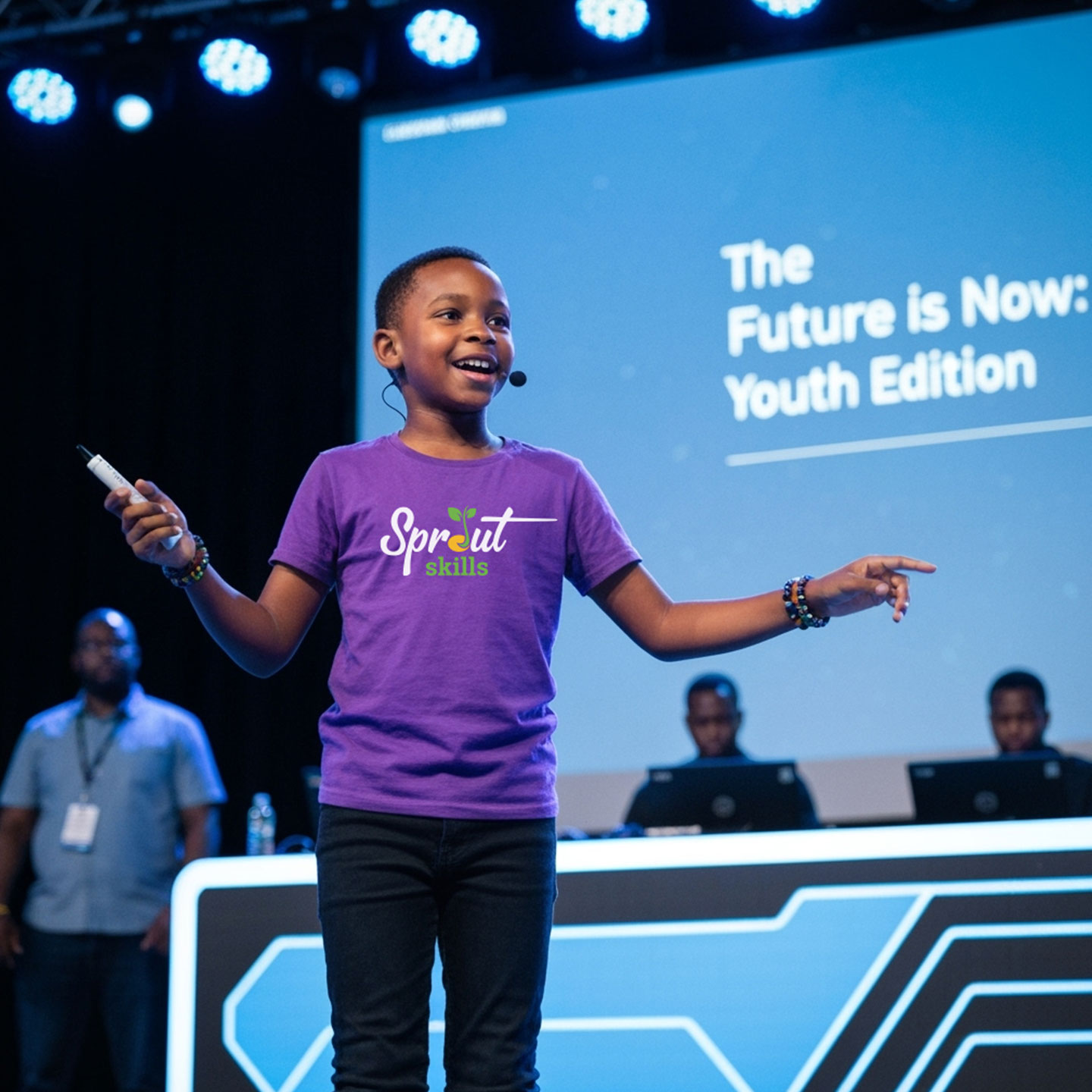
Boys thrive when they are given the right environment. One that is safe, structured, and encouraging. In that kind of space, they can learn to express thoughts clearly (finding words for feelings and ideas), process emotions constructively (without shame or suppression), build genuine confidence (with resilience, not shutdown), and communicate under pressure (in everyday life and high-stakes moments).
They need to see, through experience, that strength includes emotional awareness. That confidence includes knowing how to speak. That the ability to say "I'm struggling" or "Here's what I think" is not weakness. It is maturity.
What This Looks Like in Practice
A boy who has been taught emotional intelligence can name what he's feeling ("I'm anxious about the presentation tomorrow"), can ask for what he needs ("Can we practice together?"), can navigate conflict without shutting down or exploding, and can build genuine friendships based on trust and honesty.
This doesn't happen automatically. It happens through intentional teaching, practice, and a safe space to try, fail, and try again.
How Parents and Educators Can Support Boys
If the boy in your life has great ideas but struggles to express them, if he is confident in some areas but withdraws in others, or if he avoids speaking up or sometimes lets his emotions speak louder than he intends, he doesn't need fixing. He needs the right environment to grow.
1. Model Emotional Expression Yourself
Boys learn more from what they see than from what they're told. If a father can say "I'm feeling frustrated right now, so I'm going to take a walk to cool down," the son learns that emotions are normal and manageable.
If a mother can say "I made a mistake today and I'm disappointed in myself, but I'm going to learn from it," the son learns that vulnerability and growth go together.
2. Create Safe Spaces for Conversation
Many boys won't open up in formal "let's talk about feelings" settings. They'll talk while you're driving together, playing a game, or working on a project side by side.
Pay attention to when your son is most open. Then create more of those moments.
3. Teach Emotional Vocabulary
Most boys know "happy," "sad," and "angry." But what about anxious, disappointed, overwhelmed, proud, embarrassed, grateful, or frustrated?
The more words a boy has for his internal experience, the better he can understand and manage it.
4. Validate Without Fixing
When a boy shares a difficult emotion, the instinct is often to fix it immediately. "Don't worry about that." "You'll be fine." "Just try harder next time."
But what he often needs first is validation. "That sounds really hard." "I can see why you'd feel that way." "It makes sense that you're frustrated."
Validation doesn't solve the problem, but it creates the safety needed for the boy to work through it himself.
5. Invest in Skills Beyond Academics
Confidence built only on grades is fragile. Boys need opportunities to develop competence in multiple areas: communication and public speaking, teamwork and collaboration, creative expression through art, music, or writing, physical activity and sports, and service and leadership in their communities.
Each of these builds a different kind of confidence. Together, they create a strong, well-rounded sense of self.
How Sprout Leadership Programs Are Bridging This Gap
At Sprout Life Skills in Nairobi, this is exactly what we are intentional about.
Our programs create a warm, structured space where children, especially boys, learn to discover their strengths, find their voice, and grow into confident communicators and thoughtful leaders.
Through coaching, interactive sessions, and real-life presentation opportunities, children don't just hear about these skills. They practice them, build them, and carry them forward.
"He came home from his first session and actually told me how his day went. In full sentences. That was new." A Sprout parent, Kilimani
What Makes Our Approach Different
We don't lecture boys about emotions. We create structured opportunities for them to practice expressing themselves in safe, supportive environments.
We focus on three core pillars. Naturalness: helping boys discover and trust their authentic voice. The Voice: building vocal presence and confidence in how they speak. Words: developing clarity, structure, and persuasive communication.
This isn't theory. It's practice. Week after week, boys stand up, speak, receive constructive feedback, and try again. Through repetition in a safe space, they build skills that transfer everywhere: at home, at school, in friendships, and eventually in the workplace.
FAQs About Emotional Development for Boys
Why do boys struggle to express emotions?
Many boys are socialized from a young age to suppress emotions, particularly vulnerability. Cultural expectations often emphasize strength and independence while discouraging emotional expression. Without deliberate teaching, boys don't develop the vocabulary or safe spaces needed to articulate their feelings.
How can parents teach emotional intelligence to boys in Kenya?
Start by creating safe spaces for conversation. Name emotions yourself ("I'm feeling frustrated because..."), validate their feelings without judgment, and model healthy emotional expression. Structured programs like communication and leadership training can also provide boys with tools and practice in a supportive environment.
What are signs a boy is emotionally struggling?
Watch for withdrawal from activities he used to enjoy, increased irritability or anger outbursts, difficulty concentrating, changes in sleep or appetite, or avoiding social situations. Some boys become unusually quiet while others act out. The Child Mind Institute offers helpful resources for recognizing emotional challenges in children.
At what age should emotional skills be taught?
It's never too early or too late. Even preschoolers can begin learning to name feelings. The primary school years (ages 6 to 12) are particularly formative for developing emotional vocabulary and coping strategies. Adolescence requires more sophisticated skills for managing complex emotions and social pressures.
Will teaching emotional intelligence make my son "too soft"?
No. Emotional intelligence makes boys stronger, not weaker. It gives them more tools, not fewer. A boy who can name his emotions, express his needs, and navigate conflict maturely is better equipped for leadership, relationships, and high-pressure situations than one who can only suppress and push through.
How does public speaking training help with emotional development?
Public speaking requires boys to organize their thoughts, express themselves clearly under pressure, and receive feedback constructively. These are core emotional intelligence skills. At Sprout, boys practice self-awareness (knowing what they want to say), emotional regulation (managing nerves), and communication (expressing themselves with clarity and confidence).
Questions for Reflection:
- When was the last time your son expressed a vulnerable emotion to you?
- Does he have the vocabulary to describe what he's feeling beyond "fine" or "okay"?
- What messages about masculinity is he receiving from school, friends, and media?
- Are you modeling healthy emotional expression in your own life?
- What opportunities does he have to practice communication in safe, structured settings?
Moving Forward: Your Son's Potential Is Waiting
One day, your son will need to speak for himself, lead others, and navigate life's challenges with maturity and grace.
Those skills are not automatic. They are taught, practiced, and nurtured one session at a time.
We are not just raising boys who succeed. We are raising future men who will need to communicate, connect, and lead. Men who can handle rejection with resilience. Men who can build trust in relationships. Men who can express what they need without shame.
Remember: Your son doesn't need fixing. He needs the right environment to grow. An environment that values his voice, teaches him emotional vocabulary, and gives him safe opportunities to practice expressing himself.
At Sprout, we create exactly that environment. Week after week. Session after session. For boys across Kenya who are learning that strength includes self-awareness, and confidence includes knowing how to speak.
Help Your Son Find His Voice
Our programs give boys the tools to express themselves with confidence, navigate emotions with maturity, and communicate with clarity. Next cohort starts soon.
Explore Kids Programs See Online Options📚 Further Reading & Sources: