

The Silent Confidence Crisis Hitting African Children Between 10 and 15-And What Parents Can Do This Week
"My daughter used to tell me everything. Then she turned 12. Now I get one-word answers and a closed bedroom door. I thought it was just teenage attitude. I did not realise she was drowning inside." A mother from Kampala, Uganda
If this sounds familiar, keep reading. Because what this mother described is not attitude. It is not a phase. And it is not her daughter's fault.
It is a confidence crisis. And it is happening in homes across East Africa right now. In Nairobi, Kampala, Dar es Salaam, Kigali, and Addis Ababa. Quietly, in children who look fine on the outside and are falling apart on the inside.
The ages of 10 to 15 are the most important window for building confidence in children. Get it right and you give your child a foundation they will stand on for decades. Miss it, and the consequences can follow them well into adulthood.
This post will show you exactly what the confidence crisis looks like in African children, why it is worse now than it has ever been, and what you can do this week to start turning it around.
What the Confidence Crisis Actually Looks Like
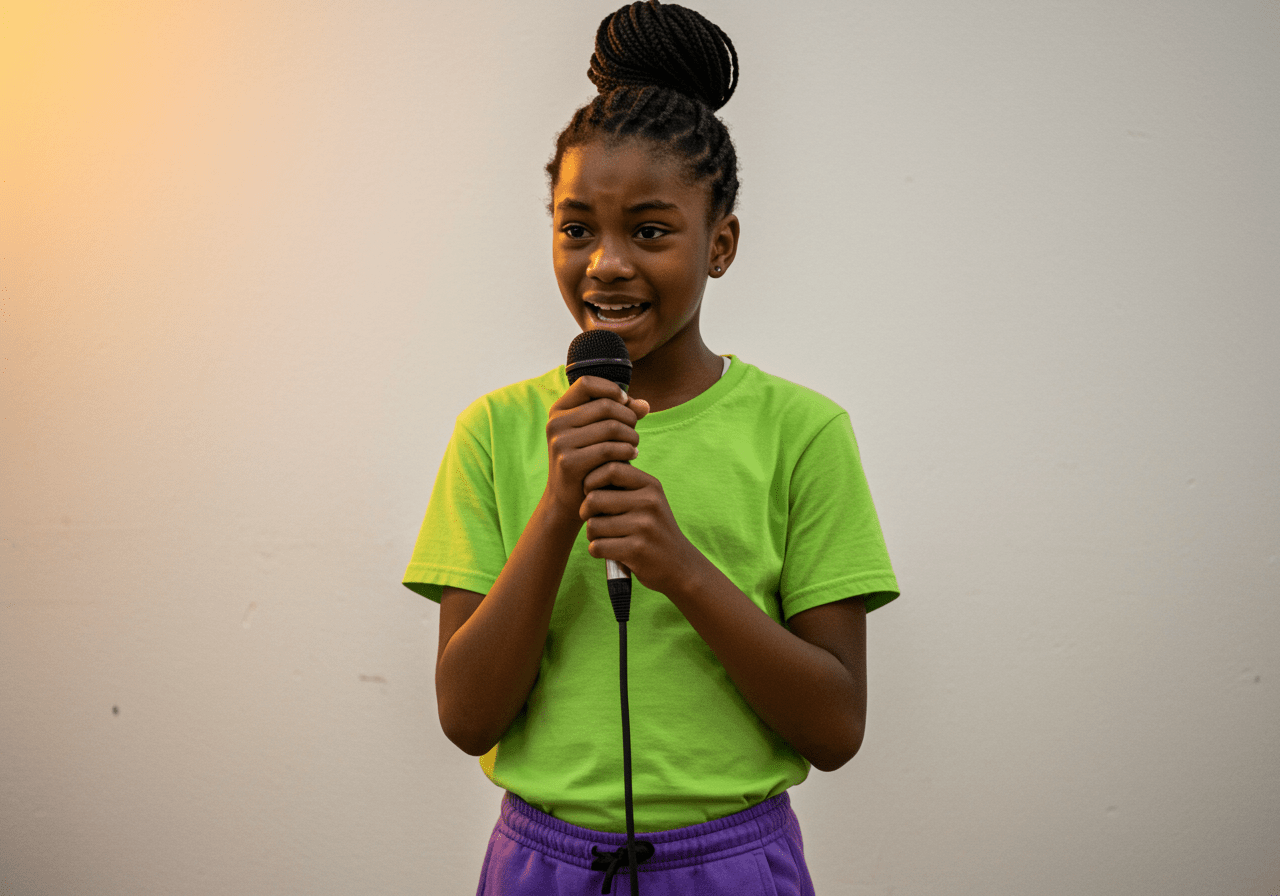
We need to be clear about something first: a child in a confidence crisis does not always look like a child who is struggling. In fact, many of the most affected children look perfectly fine. They go to school. They smile. They do their homework. The crisis is invisible to everyone except the child going through it.
Here is what it actually looks like in African preteens and teens:
The Withdrawal Signs
Your child stops sharing opinions at family time, in class, or with friends. Not because they have none, but because they no longer trust that their voice matters. They avoid new activities and new friendships because the fear of being seen and found wanting is too heavy. They compare themselves constantly to siblings, classmates, and children on social media, and always feel like they are coming up short. They keep asking "was that okay?" or "do you think they like me?" because they cannot find that reassurance inside themselves.
The Performance Signs
Academic performance drops. Not because of ability, but because anxiety makes it hard to try. Your child deflects every compliment. "It was nothing." "I just got lucky." They give up quickly on hard tasks, treating difficulty as proof they are not good enough rather than as a normal part of learning.
The Relationship Signs
Mild corrections feel like devastating judgments, and your child carries them for days. They agree with everyone, never say no, and are terrified of disappointing people. They sit at the back. They never raise their hand. They choose invisibility as a way to stay safe.
The danger of the "good child" disguise: Many children in a confidence crisis are described by teachers as "quiet," "well-behaved," or "no trouble at all." These children are not thriving. They have learned that being small is safer than being seen. The confidence crisis in African children often hides behind good behaviour. This is one of the most important things parents need to understand.
The Numbers: Why This Is Worse Than We Thought
This is not just something we observe in our coaching work. The data from our own continent is alarming.
These numbers represent real children in real classrooms and real homes. Behind each statistic is a parent doing their best, often with no idea what is actually happening inside their child.

Why African Children Are Especially Vulnerable Right Now
The confidence crisis in young people is a global problem. But African children face specific pressures that make them especially vulnerable. Understanding these pressures is not about making excuses. It is about responding well.
1. The Academic Pressure Trap
In most African households, academic performance is the main measure of a child's worth. When a child's value is tied entirely to grades, failure stops being a learning moment. It becomes an identity threat.
A 13-year-old who fails an exam does not just feel like they failed the test. They feel like they have failed as a person. As a child. As a future provider. As a representative of the family name. This is an impossible weight for a developing brain to carry.
Research from the University of Nairobi's Department of Psychology (2022) found that children in high academic-pressure homes were 2.4 times more likely to show low-confidence behaviour than children in homes where effort, rather than results, was what parents celebrated.
2. The Social Media Identity Collision
Today's 10 to 15 year old African child is the first generation to grow up with a split identity. There is who they are at home and in their community, and then there is who they see celebrated on Instagram, TikTok, and YouTube.
The gap between these two worlds is creating real confusion. Children are exposed to global standards of beauty, wealth, and achievement that look nothing like their lived reality. And they begin to feel that their real life, their real family, their real body, and their real circumstances are not enough.
Children who do not have a strong internal sense of who they are will borrow their identity from whoever offers one most convincingly. Right now, that is the algorithm.
3. The Silence Around Emotional Life
In many East African cultures, emotional life is private. You do not burden others with your feelings. You handle things internally and present a composed face to the world. These values have deep roots and real wisdom.
But applied to a 12-year-old who is feeling anxious, self-doubting, and socially confused, those values produce silence where there should be conversation. A child who has been taught, directly or by example, that emotional struggle is private does not ask for help. They get quieter. And the quieter they get, the less anyone knows they are struggling.
4. The Post-Pandemic Confidence Gap
The COVID-19 pandemic disrupted schooling, social development, and daily routine for African children at exactly the ages when confidence is most actively built. Children who were 8 to 11 during school closures are now 12 to 15. UNICEF research (2023) shows that this age group has measurably lower social confidence than pre-pandemic equivalents. They missed the experiences that build the social muscles confidence depends on.
Build Your Child's Confidence From the Inside Out
At Sprout Life Skills, we work with children aged 6 to 17 across Africa to build real, lasting confidence through communication, expression, and identity. Our programmes give young people the skills to find their voice and use it well.
Explore Our Kids Public Speaking CourseWhat You Can Do This Week: Practical Steps That Work
Understanding the problem is step one. But understanding without action changes nothing for your child. Here is exactly what to do, starting tonight.
Tonight: Have the Right Conversation
Most parents ask their children the wrong questions. "How was school?" gets "fine." "Did you do your homework?" gets "yes." "Are you okay?" gets "yes" from a child who is very much not okay.
The questions that actually open children up are specific, open, and do not carry any judgment. Try these tonight:
"What was one moment today where you felt proud of yourself?"
This teaches self-recognition, which is one of the foundational building blocks of confidence.
"Was there anything today that felt hard or uncomfortable?"
This opens the door without any pressure. Your child can answer or redirect. What matters is that the door is open.
"Is there anything going on with you lately that you have not told me about?"
Said gently, not as a confrontation. This one question can change the entire direction of a relationship.
The most important instruction in this post: When your child answers, do not immediately try to fix it. Do not minimise it ("that's nothing, you'll be fine"). Do not jump to advice. Just listen. Say "tell me more." The act of being truly heard is itself one of the most powerful confidence builders that exists. Most children in a confidence crisis feel fundamentally unheard.
This Week: Change One Daily Habit
Small, consistent actions build confidence more reliably than single big interventions. Choose one of these and do it every day this week:
The Daily Acknowledgement: Each evening, name one specific thing your child did well. Not grades, not performance. Character. "I noticed you were patient with your younger sibling today." "I saw how hard you kept working even when it got difficult." Specificity is everything. "Good job" does nothing. "I noticed you kept going after the third attempt" builds self-concept.
The Voice Exercise: Give your child five minutes during family time to talk about whatever they want. You listen. You ask questions. You do not redirect, correct, or take over. Five minutes of being genuinely listened to, every day, rebuilds the belief that their voice matters.
The Mistake Normaliser: Share one thing that did not go well in your own day, and what you learned from it. When children see adults handle imperfection with calm, they learn that failure is not fatal. This is one of the most powerful confidence interventions a parent can make, and it costs nothing at all.
Quick Tip: Research from the Cornell Institute for Research on Children shows that children who receive specific, character-based praise are significantly more likely to persist through difficult challenges than children who receive only results-based praise. The wording you choose matters more than you think.
This Month: Build the Environment
Confidence is not only built in conversations. It is built in the environment your child lives in every day. Here are three shifts to make this month:
Remove comparison language entirely. "Your cousin got an A, why didn't you?" is one of the most confidence-eroding sentences in the African parenting vocabulary. It teaches children that their value is always relative, always measured against someone else. Take it out of your home completely.
Let them experience manageable failure. Stop rescuing your child from every hard situation. The child who is never allowed to struggle never discovers they can cope. Managed difficulty, with your support nearby but not intervening, is where resilience and real confidence are actually built.
Create space for opinions. Ask your child what they think about decisions that affect them: what to have for dinner, where to spend a Saturday, how to handle a family situation. Their input may not always win. But being consulted builds the internal experience of having a valid perspective, and that experience is the beginning of confidence.
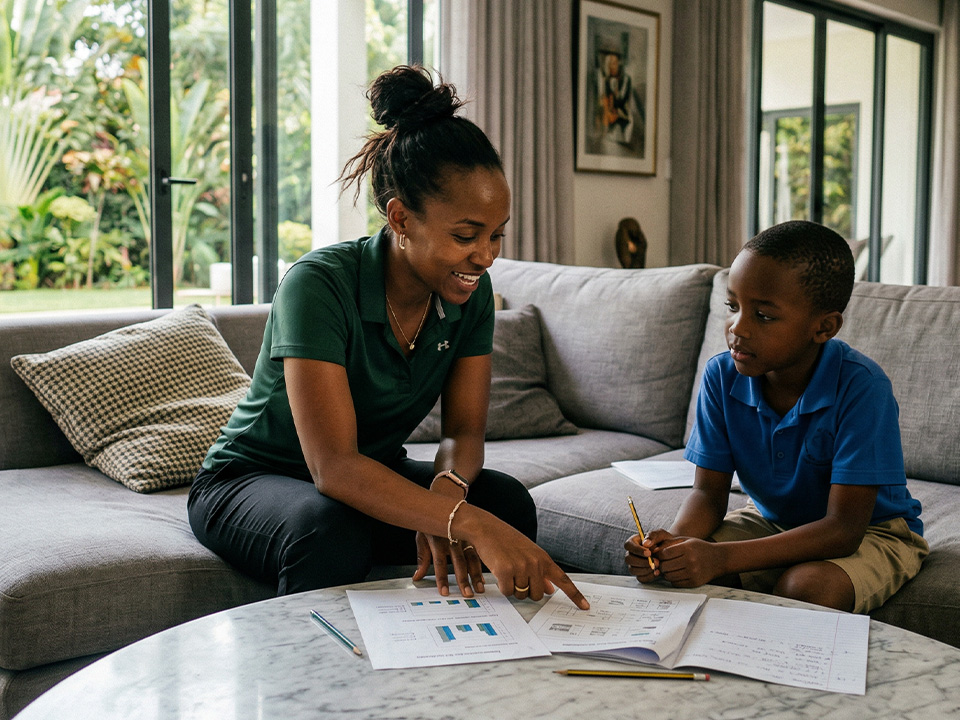
The right conversation at the right moment can change everything for a child who is struggling with confidence.
The Role of Skills and Expression in Building Confidence
One of the clearest findings in research on child confidence is this: children who have a skill they can point to feel more confident across all areas of their life. Not just in that one skill. Everywhere.
This is why at Sprout, we use public speaking and communication as a confidence-building tool. Not to produce children who are simply good at speaking. But because the experience of finding your voice, expressing yourself clearly, and being heard by others does something to a child's core sense of self that very few other activities can replicate.
A child who stands up in front of a room and gets their point across, for the first time, does not just gain a skill. They gain a new story about who they are. And that story is what confidence is actually made of.
Alongside communication, invest in one or two other areas that give your child a genuine sense of competence: music, sport, art, coding, cooking, entrepreneurship. Not to build a CV. To build a self.
Key Insight: Confidence is not a personality trait. It is not something children are born with or without. It is a skill, and like every skill, it can be built deliberately at any age with the right environment and the right tools. The window between 10 and 15 is not a crisis to panic about. It is one of the most important opportunities you will ever have as a parent.
A Note for NGOs and Organisations Working With Young People
If you work in youth development, education, or child welfare across East Africa, the data in this post applies directly to the children in your programmes.
The confidence gap is not just a parenting issue. It is a structural one. Children who arrive at your programmes carrying a confidence deficit will engage differently, take fewer risks, contribute less, and benefit less. Not because of lack of potential, but because they do not yet believe in it.
Integrating structured confidence and communication work into youth programmes is not a luxury. The evidence is clear: organisations that build emotional and social skills alongside vocational or academic skills produce measurably better long-term outcomes for the young people they serve.
If you are working on programming for young people aged 10 to 17 and want to explore how personal development can be integrated into your existing model, we would be glad to have that conversation.
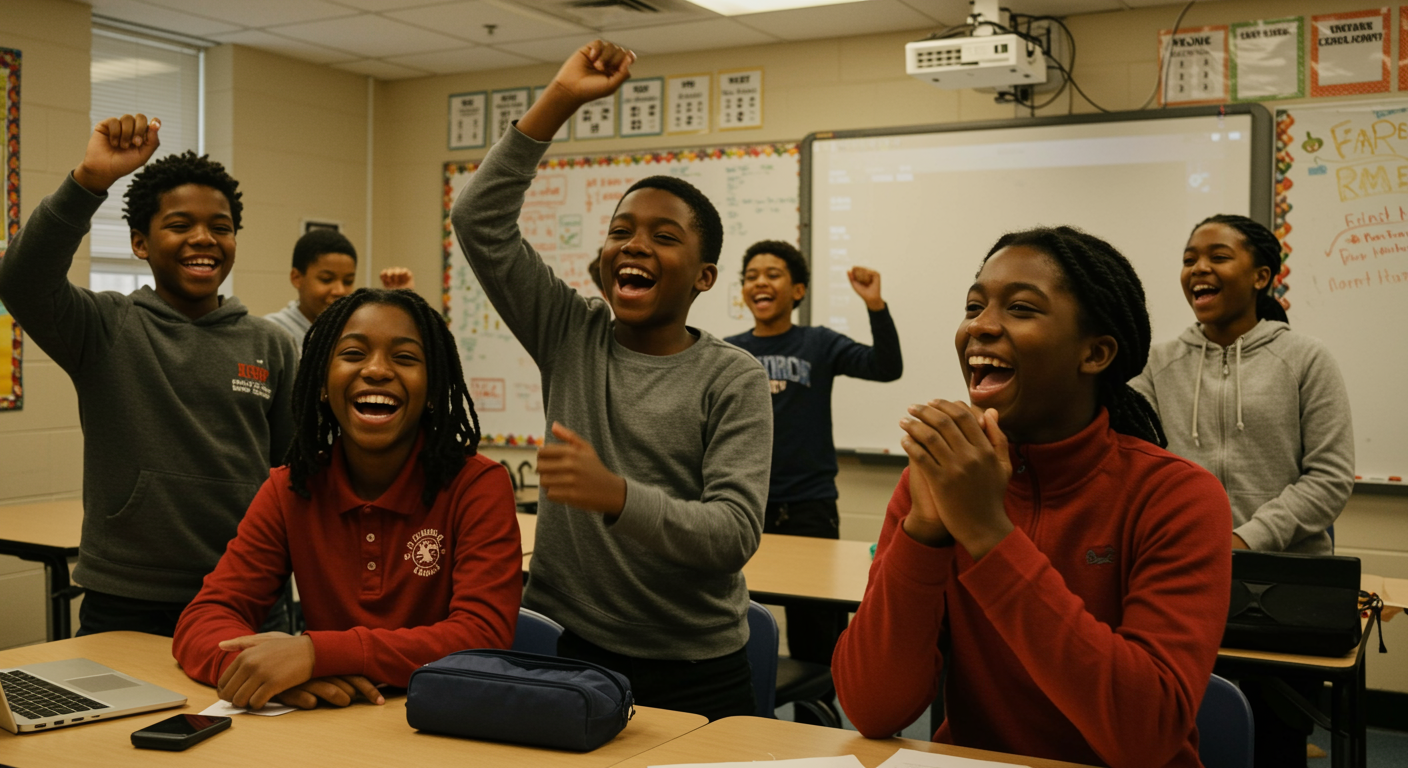
At Sprout, children aged 6 to 17 learn to find their voice and use it with confidence.
Your Child's Confidence Is Not Fixed
The most important thing to take away from this post is simple. Your child's confidence is not a personality trait they were born with or without. It is a skill. And like every skill, it can be built, deliberately, at any age, with the right tools and the right environment.
You do not need to do everything at once. You do not need to be a perfect parent. You need to show up, pay attention, and choose one thing to do differently this week.
Remember: The child who knows they are seen, heard, and believed in by at least one adult does not need to search for confidence. They already have a foundation to build on. Be that adult. Start tonight. The conversation is waiting.
At Sprout Life Skills, we work every day with children across Africa to build exactly this kind of grounded, confident, self-aware young person. We would love to be part of your family's journey.
FAQs: Confidence in Children Aged 10 to 15
What causes low confidence in African children?
Low confidence in African children aged 10 to 15 is most often caused by a combination of intense academic pressure, social media comparison, cultural silence around emotions, and the developmental disruptions that followed the COVID-19 pandemic. Children who have not had a strong, stable sense of identity built at home are most vulnerable to these pressures.
How can I tell if my child has a confidence problem?
Key signs include withdrawing from conversations and social situations, deflecting praise, avoiding new experiences, compulsive people-pleasing, giving up quickly on difficult tasks, and extreme sensitivity to criticism. Many children with low confidence are quiet and well-behaved, which makes the problem easy to miss.
What is the best age to work on a child's confidence in Kenya and Africa?
Confidence-building work is valuable at any age, but the window between 10 and 15 is especially critical. This is when identity is being formed, social comparison intensifies, and the patterns children build now tend to become the patterns they carry into adulthood. Starting early, with practical, consistent habits at home, makes the biggest difference.
Does public speaking really help build confidence in children?
Yes, and the research is clear on this. Children who learn to express themselves in front of others gain not just a communication skill but a new story about who they are and what they are capable of. This self-concept shift carries into all other areas of life. Public speaking is one of the most effective confidence-building tools available to children aged 6 to 17.
How can parents build confidence in a child who is already a teenager?
Start with connection, not correction. Use specific, open questions to open conversations. Give your teenager genuine opportunities to be heard, to make decisions, and to experience manageable challenges. Invest in one or two skill areas outside of academics. Remove comparison language from your home. And consider structured confidence programmes if the challenges run deeper.
Help Your Child Find Their Voice
Our Complete Kids Public Speaking Course helps African children aged 6 to 17 build genuine confidence rooted in character, competence, and self-expression. Next cohort starting soon.
Complete Kids Public Speaking Course Try SproutHub OnlineResearch and Sources Referenced:
- UNICEF East Africa Child Wellbeing Survey (2023)
- Kenya National Bureau of Statistics Youth Mental Health Survey (2022)
- African Union Education Quality Monitor Report (2023)
- Lagos State Ministry of Education Learner Confidence Survey (2022)