
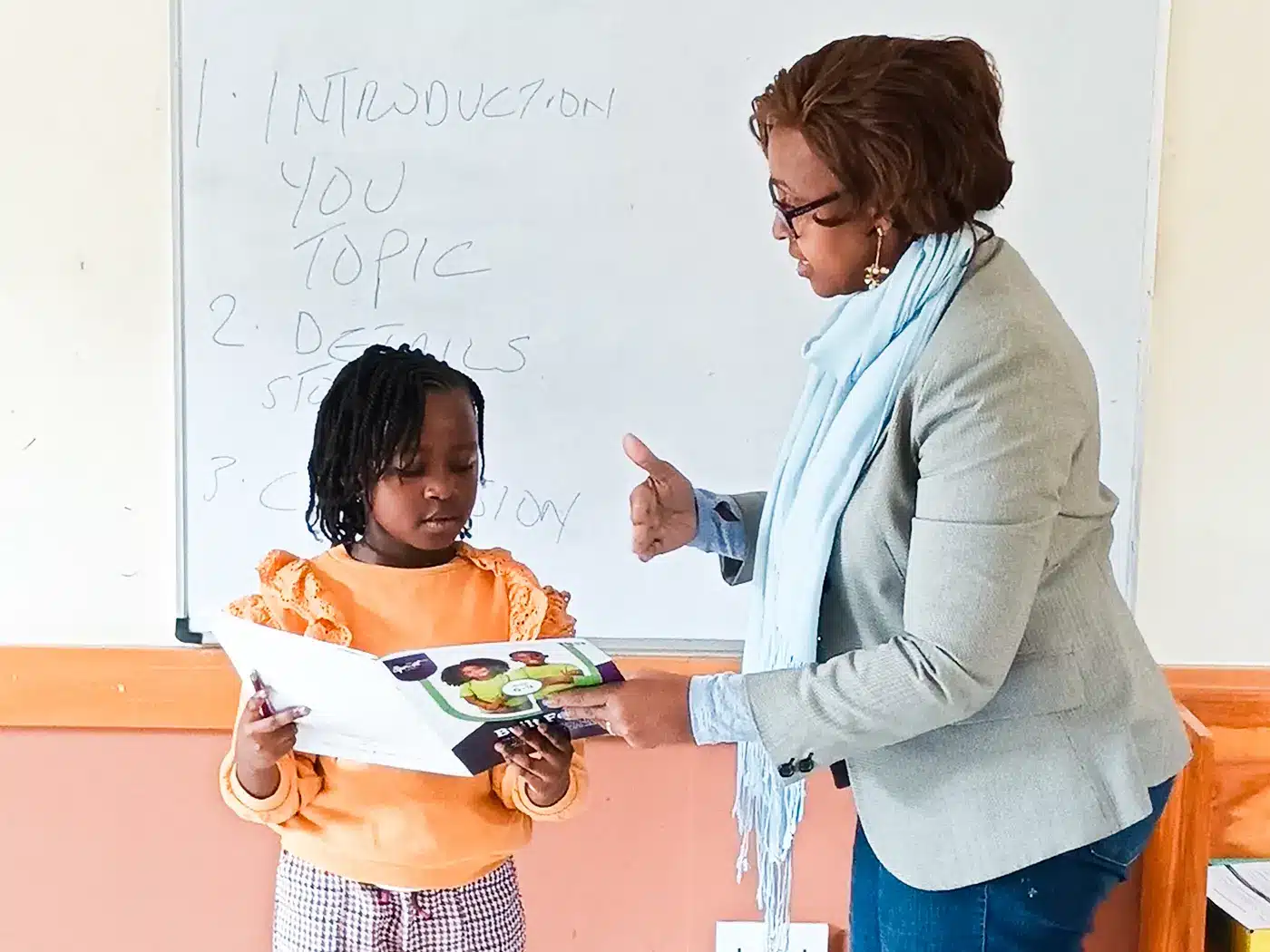
Goal Setting for Children Aged 6 to 10: 7 Things Every Parent Must Know
Your child is not too young to learn how to set goals. In fact, right now is the most important window. This guide covers seven research-backed things every parent of a 6 to 10 year old needs to understand about how goal setting works at this age, and what it actually builds in a child.
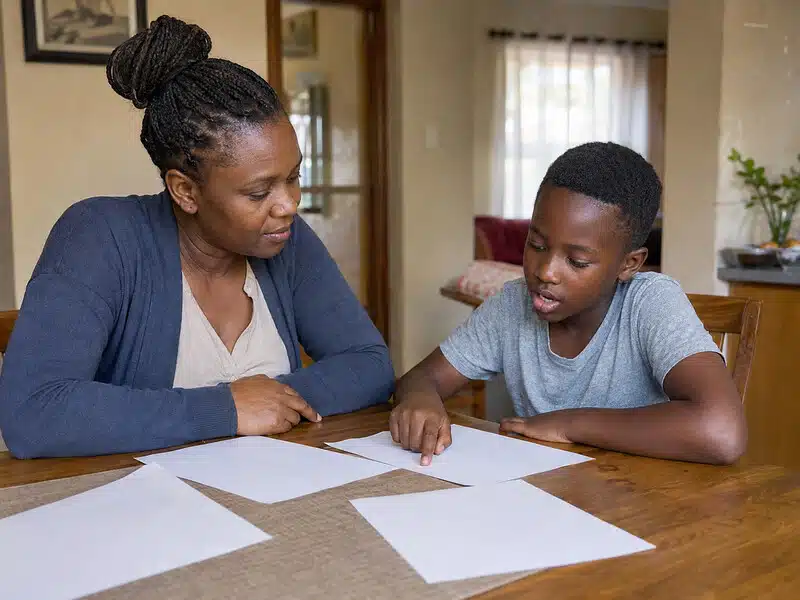
"My 7-year-old wants to be everything: a doctor, a footballer, an astronaut, and a chef. I don't know whether to encourage all of it or help her focus. I don't want to crush her dreams but I also don't know what to do with them."
A mother from London, UK- 01 Why ages 6 to 10 are the key window
- 02 Keep goals small and close
- 03 Let them choose the goal
- 04 Make the goal visible every day
- 05 Celebrate every step
- 06 Teach the effort-outcome connection
- 07 Keep review conversations light
- 08 Model goal setting yourself
- 09 Quick summary
- 10 Frequently asked questions
This is one of the most common questions parents of young children bring to Sprout Life Skills. And the answer is simpler than most parents expect: at ages 6 to 10, goal setting is not about focus or certainty. It is about something far more important: building the belief that what your child wants matters, and that their choices and actions can make things happen.
That belief is the foundation everything else is built on. Here is how to lay it properly.
Why ages 6 to 10 are the most important window for goal setting in children
Between the ages of 6 and 10, children are forming their foundational beliefs about themselves and the world. Am I capable? Do my efforts matter? Can I make things happen, or do things just happen to me?
These beliefs, which psychologists call self-efficacy, are being shaped right now, in the everyday moments of your child's life. The child who experiences the connection between effort and outcome during these years arrives at the preteen stage with an internal compass. The child who does not arrives without one.
Children aged 6 to 10 who are explicitly taught that effort leads to results show significantly higher academic resilience and self-confidence by age 12.
Journal of Educational Psychology, 2023Self-efficacy formed before age 10 is the single strongest predictor of goal-directed behaviour in adolescence.
Bandura, A., Social Foundations of Thought and Action, updated meta-analysis, 2022You are not teaching your 7-year-old to be a high achiever. You are teaching them that they are someone whose choices matter. That is the real goal of goal setting for children aged 6 to 10. Everything else flows from there.
Keep Goals Small, Concrete, and Close
A 7-year-old's goal horizon is weeks, not years. Meet them there.
Abstract, long-term goals mean nothing to a child aged 6 to 10. "I want to be successful" is completely meaningless at this age. "I want to learn to ride my bike by the end of the month" is perfect.
The goal needs to be something the child can picture clearly, achieve within weeks, and measure simply. When a young child sets a goal and reaches it, even a small one, they experience one of the most powerful developmental moments available: the feeling that they made something happen. That feeling is the seed of lifelong goal-directed behaviour.
Start with goals that are almost certain to succeed. Build the experience of winning first. Ambition can grow from there.
- Ask: "Is there something you would love to be able to do that you cannot do yet?" Let them choose, not you.
- Make sure the goal can be reached within 2 to 4 weeks. If it is longer, break it down into a first step that is that close.
- Write it down together with a simple drawing or picture. Make it visual and exciting.
Let Them Choose the Goal, Every Time
Ownership at age 7 builds motivation at age 17.
It is very tempting, at this age, to nudge your child toward goals you think are worthwhile (reading more, practising maths, improving a specific skill. And those things may genuinely matter. But a goal your child did not choose is not their goal. It is yours. And they will pursue it with exactly the energy it deserves: very little.
The purpose of goal setting for children aged 6 to 10 is not to produce specific achievements. It is to build the habit of wanting something, working toward it, and experiencing the connection between effort and result. That habit works whether the goal is learning to swim or learning to juggle. The subject is almost irrelevant. The process is everything.
- Present options if they are stuck: "Is there something you want to get better at? Something at school, a sport, a hobby, or something at home?"
- If they choose something that feels trivial to you, support it fully. The skill being built is far more important than the subject.
- Never override or redirect their goal without a genuine conversation about why.
Make the Goal Visible Every Day
Out of sight is out of mind, especially for a 6-year-old.
Young children live entirely in the present moment. A goal set on Monday has a short half-life without regular reinforcement. The solution is visibility: making the goal a consistent part of the child's daily environment so it stays alive in their awareness.
This does not need to be elaborate. A drawing on the fridge. A sticker chart on their bedroom door. A simple reminder on the bathroom mirror. What matters is that the child sees it, is reminded of it, and has a daily moment of connection with what they are working toward.
- After setting the goal, ask: "Where should we put this so you see it every day?"
- Let them decorate it, draw it, or colour it. Ownership of the visual increases engagement with the goal.
- Refer to it naturally in daily conversation: "How is the swimming practice going? You are getting closer."
10 Daily Habits for a Confident Child (Ages 6 to 17)
Goal setting works best when it is supported by daily confidence habits. Send HABITS via WhatsApp or Instagram DM to receive this free resource, or explore our coaching programmes for children aged 6 to 10.
Celebrate Every Step, Not the Finish Line
Progress is the point. The outcome is just evidence.
At ages 6 to 10, the most important thing a child learns from goal setting is not achievement. It is persistence. The willingness to keep going when something is difficult, to try again after a setback, and to trust that effort accumulates into progress.
That learning happens in the middle of the goal, not at the end, and it is reinforced by how you respond to the middle. When you notice and celebrate the small steps. For example: "I saw you practise that three times today even though it was hard". When you say this, you teach your child that effort itself is worthy of recognition. That belief becomes the engine of every future goal they will ever set.
- Name specific efforts out loud: "I noticed you tried again even after it did not work the first time. That is exactly what goal setting looks like."
- Create a simple progress tracker: stars on a chart, blocks on a bar, drawings on a calendar, so the child can see movement visually.
- When the goal is reached, celebrate it genuinely. Then ask: "What do you want to work on next?"
Teach the Effort-Outcome Connection Explicitly
Children who understand why they are improving keep improving.
Young children do not automatically connect their effort to their results. They need to be taught this connection explicitly and repeatedly. Without it, success feels random: something that happens or does not happen, rather than something produced by their own choices.
This matters enormously for resilience. A child who understands that their effort produced the result will try again when they fail. A child who thinks results are random will not, because trying again seems pointless if outcomes are outside their control.
- When your child achieves something, ask: "Why do you think that worked? What did you do that made it happen?"
- When they struggle, ask: "What is one thing you could try differently?" rather than stepping in to fix it.
- Use your own life as a teaching tool: "I kept practising this until it got easier. That is why I can do it now."
Keep Review Conversations Light and Curious
Check in on the goal regularly. Keep it playful, not pressured.
Goal setting with young children must remain enjoyable. The moment it feels like an obligation or an assessment, the child will disengage. At this age, the review is not a performance evaluation. It is a simple, warm check-in that keeps the goal alive and gives the child the experience of reflecting on their own progress.
Two or three questions, once a week, in a relaxed moment. That is all that is needed. The habit of reflection is being built, not the habit of reporting.
- Once a week ask: "How is your goal going? What has been the best part? What has been tricky?"
- Keep your tone warm and interested, not evaluative. You are curious, not assessing.
- If the goal is no longer exciting, that is fine. Ask what they would like to work on instead and start fresh. Flexibility at this age is healthy.
Model Goal Setting in Your Own Life
The most powerful teacher your child has is watching you.
Children aged 6 to 10 are extraordinary observers. They are watching what you do, how you respond to difficulty, and whether the adults around them pursue things with intention. When you model goal setting openly, naming what you are working toward, sharing your progress, talking about setbacks honestly, you give your child a living example of the behaviour you are trying to build in them.
This does not require perfection. Showing your child that you sometimes fail, adjust, and keep going is more valuable than showing them that you always succeed. The lesson they need is not "goals always work out." It is "people who set goals and keep trying are the people who grow."
- Share a goal you are currently working on with your child. Keep it simple and relevant to them.
- Update them on your progress, the wins and the setbacks. Talk about what you are learning.
- Ask them to check in on your goal too. It builds partnership, and children love being trusted with adult things.
A Quick Summary for Parents of 6 to 10 Year Olds
- Keep goals small, concrete, and achievable within weeks.
- Let the child choose the goal, always.
- Make the goal visible every day.
- Celebrate every step, not just the outcome.
- Teach the connection between effort and result explicitly.
- Keep review conversations light, warm, and curious.
- Model goal setting in your own life openly.
"You are not raising a high achiever right now. You are raising a child who believes their choices matter. Everything else flows from that."
Start this weekend. Set one small goal together. Make it theirs. Write it down. And watch what begins to grow.
How Sprout Supports Goal Setting for Children Aged 6 to 10
Structured one-on-one coaching with goal setting at the core.
Intensive goal and vision work during school breaks.
A Sprout coach works with your child in your home environment.
Flexible virtual coaching, accessible globally.
For schools and NGOs: we design age-specific goal-setting programmes for organisations working with young people globally.
Goal setting for children aged 6 to 10 is not about producing achievements. It is about building the foundational belief that choices matter and effort produces results. That belief, formed now, is the internal compass your child will carry into every challenge of their adolescent and adult life. The goal you set together this weekend is a small thing. What it builds is not.
Frequently asked questions about goal setting for children aged 6 to 10

Sprout Life Skills
Sprout Life Skills is a global personal development organisation working with children aged 6 to 17 and the parents, schools, NGOs, and organisations around them. Through our 3-Month Coaching Programme, Holiday Coaching, Home Coaching, and SproutHub online programme, we build the goals, confidence, resilience, emotional intelligence, and life skills every child needs to thrive.
Sources and further reading
- Bandura, A. (2022). Self-efficacy and goal-directed behaviour in adolescence. Updated meta-analysis in Social Foundations of Thought and Action.
- Journal of Educational Psychology (2023). Effort-outcome beliefs and academic resilience in children aged 6 to 12. American Psychological Association. apa.org/pubs/journals/edu
- Sprout Life Skills. Kids and Teens Programmes. sprouts.co.ke/kids-and-teens-programs