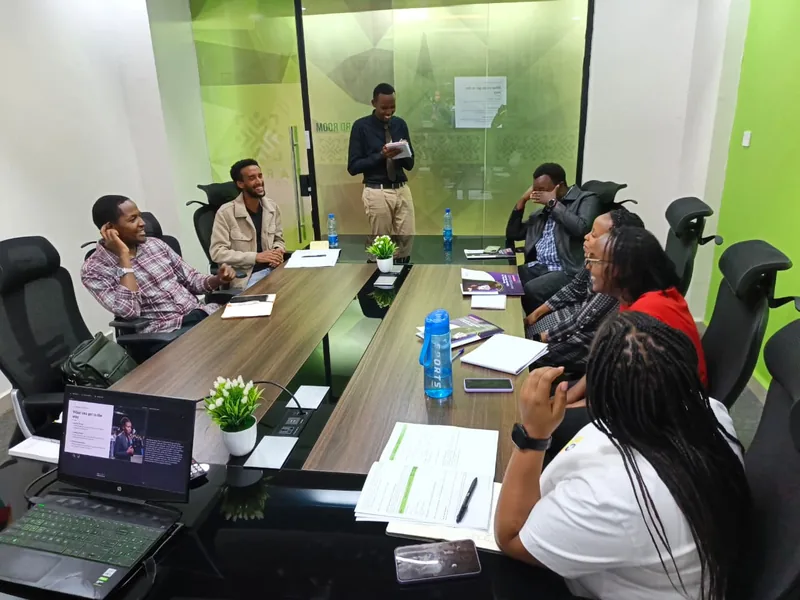
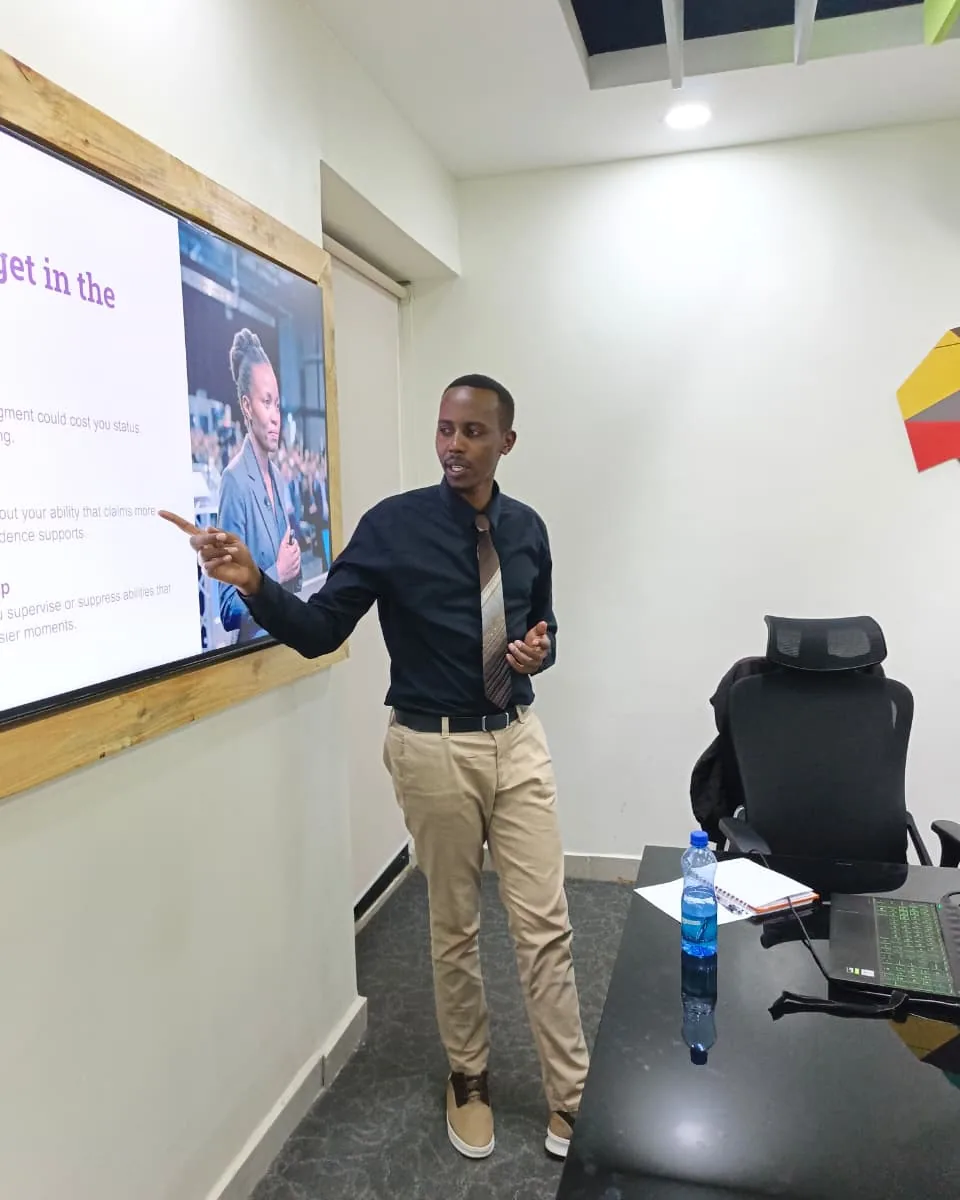
Executive presence is the composure, judgment and clear communication that make people trust a leader with more responsibility. You build executive presence by starting from how you already speak and think, then practicing staying steady under hard questions, being easy to hear and being easy to follow. Copying a polished image of a leader does not hold up, because the first difficult question shows what is underneath.
Key points
- Executive presence describes how a leader’s judgment, composure and communication come across to the people deciding whether to trust them with more.
- Senior leaders in a study by the Center for Talent Innovation said executive presence makes up 26 percent of what it takes to get the next promotion (Hewlett and colleagues, 2012).
- Executive presence can be learned through practice and honest feedback, by quiet people as well as outgoing ones.
- Because the term is often left vague, it can end up rewarding accent, schooling or appearance instead of judgment, and leaders should be honest about that.
- Sprout’s practice-based approach builds presence in a set order: Naturalness first, then Voice, then Words.
What is executive presence?
Executive presence is the impression of steady judgment and clear communication that makes people willing to follow a leader into harder decisions. Two well-known research models describe it in similar ways, using different words.
- Gravitas, communication and appearance. The Center for Talent Innovation (now Coqual) study led by Sylvia Ann Hewlett (2012) surveyed nearly 4,000 college-educated professionals. Gravitas, which includes grace under pressure, was the core quality for 67 percent of the senior executives surveyed. Only 5 percent named appearance as a key factor.
- Character, substance and style. The Bates Executive Presence Index, described by Suzanne Bates and David Casullo (2014), groups presence into these three parts and breaks them into 15 behaviors that can be assessed.
Neither model describes a personality type. Both describe how a person handles pressure and how clearly they speak, as other people see it.
In Coach Gikuyu Muchai’s words to clients, executive presence is what people see once the nerves are managed and the performance drops away. It was already there; practice makes it visible.
What is executive presence often mistaken for?
Executive presence is often mistaken for surface signals that look like authority. These two are the most common.
- Volume, height, a deep voice or an expensive suit. These may look like authority in some places, yet they say nothing about how a person decides or how they behave under pressure.
- Confidence performed for an audience. Someone can walk in looking completely certain and still be the person colleagues hesitate to trust with a hard decision. People judge presence over months and under pressure, through how a leader answers a difficult question.
Which beliefs hold people back from building executive presence?
Three common beliefs make executive presence feel out of reach. Each one has a more useful answer.
- “You either have it or you don’t.” Executive presence feels inborn mainly because it is described so vaguely. Composure, judgment and clear speaking are skills, and they grow with deliberate practice and honest feedback.
- “It is only for extroverts.” Composure and clear judgment have nothing to do with how outgoing someone is. In Sprout’s coaching experience, many leaders who are quiet by temperament and precise by habit come across with strong presence.
- “A few tricks will do it.” A rehearsed deep voice or memorized gestures may change how a person feels for a few minutes. They rarely last through a hard question, because that is exactly where a performance runs out.
Why does executive presence matter for a career?
Executive presence matters because people are often promoted when decision-makers can picture them succeeding in a bigger role, before there is direct proof. Senior executives in the Center for Talent Innovation study said presence accounts for 26 percent of what it takes to get the next promotion. The same study found that presence alone will not get someone promoted, while its absence can slow them down.
That is a good reason to build it on purpose, instead of leaving it to chance.
Do you need a senior title to have executive presence?
You do not need a senior title to have executive presence. Presence usually shows before a promotion, and it is often part of why the promotion happens. In Sprout’s coaching experience, some mid-level managers handle hard questions with more composure than people far more senior. A title can buy a leader time, yet it cannot supply the judgment and composure that people are looking for.
Is bias sometimes mistaken for executive presence?
Bias is sometimes mistaken for executive presence, because a vague term can quietly reward people who look and sound like a narrow, traditional picture of a leader. Research and practitioners have both raised this.
- In the Center for Talent Innovation study, 56 percent of professionals of color said they were held to a stricter standard of executive presence, compared with 31 percent of white professionals. The study also found that 81 percent of women and people of color were unclear how to act on the feedback they received.
- Author Minda Harts, quoted in an article by Chief, says women of color often spend more money on visual signals such as hair, nails and accessories to be seen as having presence, which adds physical and mental work.
In Kenya, the same pattern takes local forms: which accent sounds polished, which school someone attended, how fluent their English sounds next to their Kiswahili or mother tongue. None of these show whether a person makes good decisions under pressure, yet all of them can be read as presence.
This is a reason to build presence honestly. Sprout’s view is that composure and clear judgment are worth building on purpose, and a borrowed identity is not worth chasing, because it usually comes across as borrowed.
5 ways to build executive presence without performing
These five steps follow the Sprout Model, Sprout Life Skills’ practice-based framework of Naturalness, Voice and Words. The order matters: delivery built on a borrowed persona gives way under pressure, while delivery built on who you are holds.
1. Start with how you already speak and think
Executive presence grows from a settled sense of who you are, which Sprout calls Naturalness. Notice what you already do well when you speak: the way you explain a decision to a colleague you trust, or how you sound when you know your subject. That is the speaker you build from. Nobody needs to copy another leader.
Try this: record yourself explaining a recent decision to a friend, then record yourself presenting the same decision formally. Notice what disappears in the formal version, and bring it back.
2. Practice staying steady under a hard question
Composure under scrutiny is the part of executive presence people notice most. It grows when you practice difficult questions before you face them, so a hard moment feels familiar.
Try this: ask a colleague to put the three questions you least want to hear about your next proposal. Answer each one in two or three sentences, then stop.
3. Make your voice easy to hear
A leader’s voice carries conviction through pace, pauses and volume. In the Sprout Model, Voice comes after Naturalness, so it supports who you are. Practice until your pace and pauses hold up when nerves arrive.
4. Say the main point early, in plain words
Clear words let good judgment be heard, while jargon and hedging bury it. In the Sprout Model this is Words: say the main point early, organize the rest, and choose plain words people remember.
Try this: before your next meeting, write the one sentence you want people to repeat afterward, and say it in the first minute.
5. Get honest feedback, then try again
Executive presence develops through a cycle of practice and feedback. Sprout coaching follows six steps: learn, practice, record, reflect, get feedback and try again. Watching yourself on video shows what others see, and a coach or trusted colleague can describe what they noticed so you know what to practice next.
When does coaching help with executive presence?
Coaching helps when your presence holds up in some settings and slips in others, for example steady with your own team and less settled in front of a board. A coach can help you practice the specific situations that matter to you.
Executive coaching at Sprout Life Skills is one-to-one coaching with Coach Gikuyu Muchai, at Sprout’s Zarafa venue in Kilimani, online, or at a place you choose. It starts with how you already speak, then builds Voice and Words on that base. If you would like to talk it through first, you can book a free consultation.
Frequently asked questions about executive presence
What is executive presence in simple terms?
Executive presence is the composure, judgment and communication that make people trust someone with more responsibility than they hold today. Research models describe it through a few parts, such as gravitas, communication and appearance, or character, substance and style.
Can executive presence be learned?
Executive presence can be learned. It feels inborn mainly because it is described vaguely, but composure under pressure, clear judgment and clear speaking all grow through practice and honest feedback.
Do introverts have executive presence?
Introverts can have strong executive presence, because presence comes from composure and clear judgment, which have nothing to do with how outgoing someone is. Many quiet, precise leaders come across as steady and trustworthy.
Do you need a senior title to have executive presence?
You do not need a senior title to have executive presence. It usually shows before a promotion and is often part of why the promotion happens, while a title alone cannot create it.
Is executive presence sometimes just bias about accent, class or appearance?
Executive presence is sometimes used as cover for bias about accent, schooling or appearance, because the term is often left vague. Research by the Center for Talent Innovation found that professionals of color were more likely to feel held to a stricter standard of presence.
How do you build executive presence without pretending to be someone else?
You build executive presence without pretending by starting from who you are and working outward. Begin with how you already speak and think, then practice your voice and words so your judgment is easy to hear, and get honest feedback as you go.