


Your Child Can Text Fluently But Cannot Speak Up in a Room. Here Is Why and How to Fix It
"My son is brilliant on his phone. He argues points in WhatsApp threads for hours. But ask him to answer a question in class and he goes completely blank. I do not understand it." - A father from Lagos, Nigeria
This father is not alone. In Nairobi, Lagos, Accra, Kampala, and Dar es Salaam, parents are watching the same thing happen at home. A child who is sharp, funny, and confident on a screen. And silent, stiff, and shrinking the moment they are in a real room with real people watching.
This is not a personality problem. It is not shyness. And it is definitely not a sign that something is wrong with your child. It is a skills gap. A specific, identifiable, completely fixable gap between the kind of communication your child practises every day and the kind the world actually requires from them.
At Sprout Life Skills, we see this gap in almost every child who walks through our door. Children aged 6 to 17, from Kilimani to Westlands, from Karen to Runda and other areas. Brilliant children. Children with plenty to say. Children whose voice the world has simply not yet heard, because no one taught them how to use it in the spaces that matter.
Wairimu explains communication skills for children in Africa ages 6–17, effects, and what to do now. Also learn why it is getting worse across urban Africa, and what you can start doing at home this week.
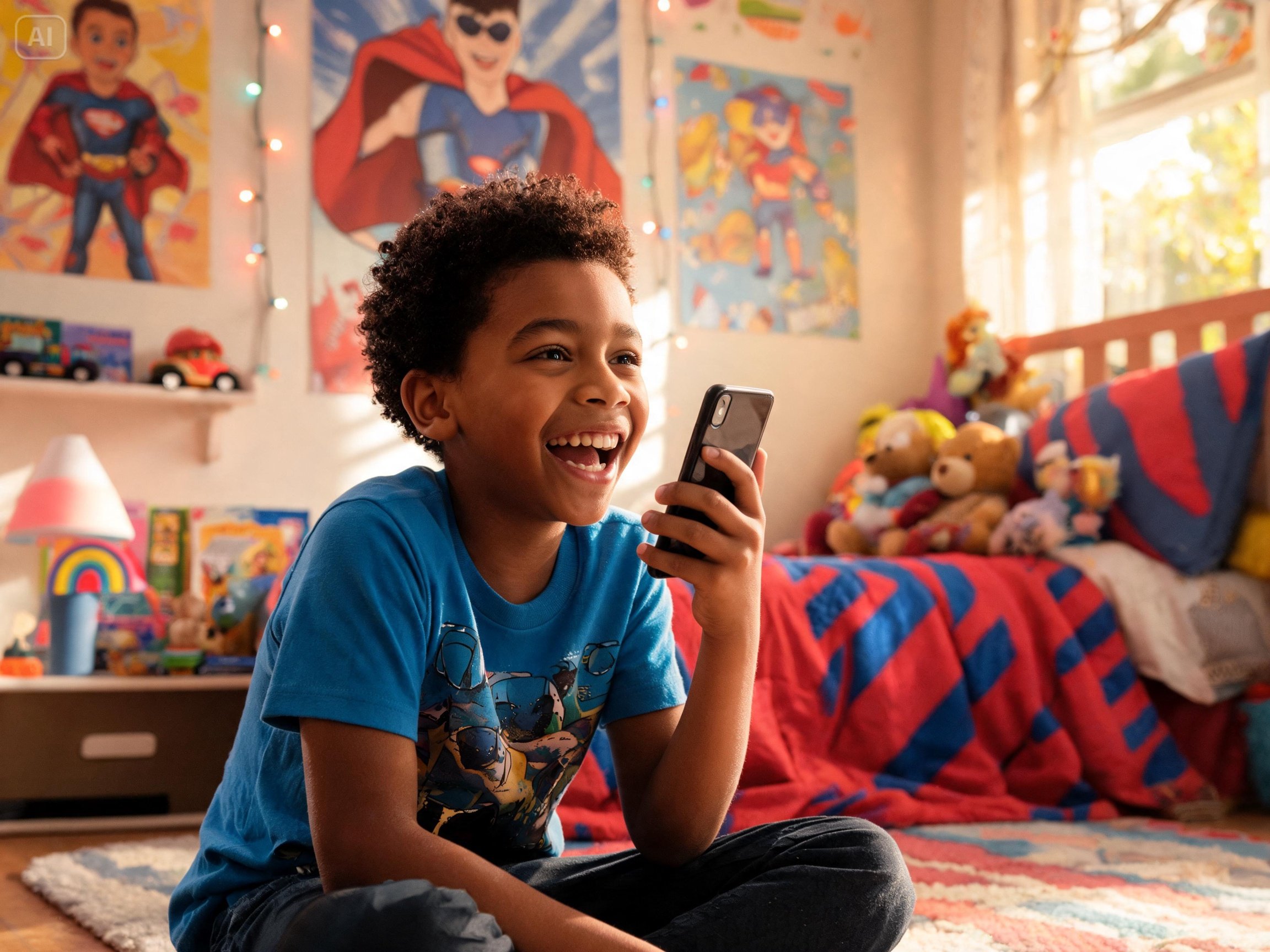
Two Very Different Skills and Why Only One Is Being Practised
Here is something most parents do not realise. Digital communication and live communication are not two versions of the same skill. They use entirely different muscles. And right now, only one of those muscles is getting any exercise.
Think about what your child does when they send a message. They type, read it back, delete a word, rewrite it, decide when to send it, and wait to see how it lands before they respond again. The whole thing happens at their pace, on their terms, with a delete button always available. No one is watching their face. No one is reading their body language. There is no pressure, no timer, and no audience.
Now think about what happens when your child is asked to answer a question in front of their class. Or read a passage aloud at church. Or introduce themselves to a new group of cousins at a family gathering in the village. Or speak to a shopkeeper in town instead of pointing silently and waiting.
In those moments, everything is live. They must think and speak at the same time. Their face, posture, and voice are all being read at once. There is no editing. There is no delay. And the pressure of being watched by people who know them, or people they want to impress, makes every second feel enormous.
A child who has spent years building their digital communication muscle, with almost no equivalent time practising live communication, is not broken. They are undertrained. And an undertrained muscle does not get stronger by hoping. It gets stronger by being used.
| What Digital Communication Builds | What Live Communication Requires |
|---|---|
| Writing at your own pace | Thinking and speaking at the same time |
| Editing before anyone sees it | Responding in real time, no delete button |
| Expressing yourself in text only | Managing tone, eye contact, and body language |
| Low-stakes, low-pressure interaction | Performing under the pressure of an audience |
| Reacting when you are ready | Listening and responding at the same time |
The problem is not that digital communication is bad. The problem is that it is the only kind of communication many children are practising. And the world your child will actually have to navigate, university seminars, job interviews, client meetings, negotiations, church leadership, community work, is a live communication world. It always has been. And no amount of texting fluency prepares a child for it.
Key Insight: The communication gap is not a personality issue. It is a practice deficit. Children are spending hours every day practising digital communication and almost no time at all practising live communication. The gap widens year by year and so do the consequences.
The Data Across Africa: This Is Bigger Than We Are Admitting
This is not something we are imagining in the coaching room. The numbers from across our continent tell a clear and consistent story.
That last number is the one that should stop every parent in their tracks. Eight out of ten teachers across East Africa are saying the same thing. Children are getting quieter in classrooms. Not because they have less to say. Because they have had less practice saying it out loud, in front of people, under pressure.
The period since 2019 covers two things: pandemic school closures and the explosion of smartphone access among young Africans. Both things happened at the same time. And both pushed children away from live communication and toward screens.
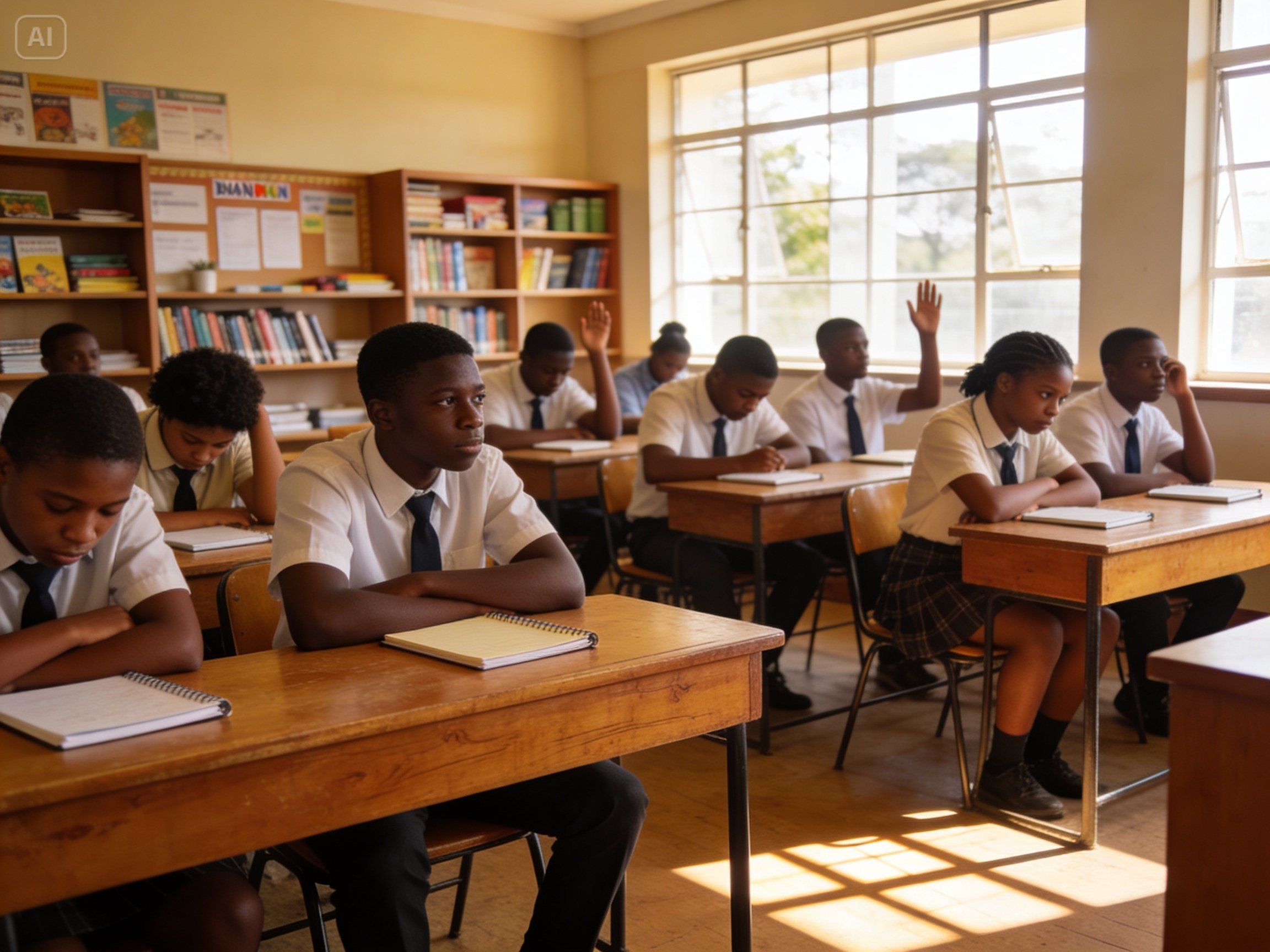
Why This Gap Runs So Deep in African Homes and Schools
Understanding why this is happening is not about blame. It is about being honest so we can respond well. There are three forces working together in most African homes and communities that quietly suppress a child's live communication development. Knowing them helps you push back against them deliberately.
The Culture of Respectful Silence
Across East, West, Central, and North Africa, children grow up inside a clear cultural message: when elders speak, you listen. At the dinner table, at family gatherings, at church, at the mosque, in the presence of teachers and community leaders, a child who stays quiet and attentive is seen as well-raised. A child who speaks up uninvited can seem disrespectful.
This is not wrong. Listening is a genuine skill. Deference to experience carries real wisdom. These are values worth keeping.
But when silence is the only communication model a child ever sees modelled at home, something else happens. The child internalises the belief that their voice is a threat, not a contribution. That speaking up means overstepping. That it is safer to stay quiet than to risk getting it wrong in front of people who matter.
That belief does not disappear at 18. It walks with them into every job interview, every university presentation, and every room where they need to be heard. The goal is not to raise children who interrupt elders. It is to raise children who know when to listen and when to speak, and who have practised both.
A School System Built Around Written Exams
Think about how your child is assessed at school. Almost entirely in writing. End-of-term papers. Multiple choice. Structured essays. The KCPE. The WASSCE. The BECE. These examinations measure a great deal, but they do not measure whether a child can construct a verbal argument, defend a position under pressure, or hold a room.
A child can move through 13 years of formal education in Kenya, Ghana, Nigeria, or Uganda without ever being formally required to stand up and speak in front of a group. The first time they face that requirement is often a university group presentation or a job interview. At 20 or 22. With no coaching and no practice behind them.
This is not the school's fault alone. It is a structural gap that parents and coaches must step into.
The Urban Smartphone Shift
Walk through any middle-class neighbourhood in Nairobi, Accra, Lagos, or Dar es Salaam on a Saturday afternoon. Children who a generation ago would have been playing outside, negotiating games, settling disputes, and practising the messy, live, real-time social communication that builds confidence are now largely inside. On devices. Communicating through screens.
This is not a moral failure. It is an adaptation to urban life, smaller living spaces, concerns about road safety, and the simple reality that screens are more immediately entertaining than the street. But it means the informal practice ground for live communication, the compound, the neighbourhood, the shared walk to school, has quietly disappeared from many children's daily lives.
What replaced it was a communication channel that rewards articulate text and penalises nothing, because nothing is live. For a child already inclined to be cautious about speaking in public, the smartphone offered a permanent and comfortable alternative. And over years, the live muscle simply stopped being used.
Give Your Child a Safe Space to Find Their Voice
At Sprout Life Skills, we work with children aged 6 to 17 across Africa to build the live communication skills that screens cannot teach and schools are not providing. In person in Nairobi, and online across the continent via SproutHub.
Explore Our Kids Public Speaking CourseWhat the Communication Gap Actually Costs Your Child
This is not a soft concern. The consequences of poor live communication skills are concrete, measurable, and long-lasting. Here is what is actually at stake.
In Education
Universities across Africa are moving toward more verbal assessment. Seminars, group presentations, viva voce examinations, peer discussions. A student who arrives having never practised speaking in a group is at a real disadvantage- not because of their intelligence, but because they cannot express it in the format being asked of them.
Research from Makerere University (2023) found that students who rated themselves as poor verbal communicators were 3.1 times more likely to be assessed below their actual academic ability. Consistently. Across every subject. Not because they did not know the material. Because they could not say what they knew in a room full of people.
In Employment and Entrepreneurship
Every stage of formal employment is a live communication test. The job interview. The probation review. The team meeting. The client pitch. The performance review. An employee who cannot communicate with confidence is consistently passed over, often without any explicit feedback about why. They leave wondering what went wrong. What went wrong was a skill they were never taught.
In the informal and entrepreneurial economy, where the majority of African youth will build their livelihoods, this is even more true. Selling an idea, negotiating a deal, managing a team, building a client relationship — all of these depend entirely on the ability to communicate clearly and confidently in person.
In Mental Health and Daily Life
The child who cannot express what they feel becomes the adult who bottles emotion. The young person who cannot advocate for themselves becomes vulnerable in friendships, romantic relationships, and work environments. The chronic inability to express oneself verbally is one of the strongest predictors of anxiety and depression in young adults.
There is a particular kind of frustration in having something important to say and no reliable way to say it. Many African children live with that frustration quietly, every single day. It is not dramatic. It does not always look like crisis. But it accumulates.
The hidden cost no one talks about: Many children who are labelled "shy," "quiet," or "not a people person" are not any of those things. They are children who were never given the tools to speak up comfortably. The label becomes a story they carry into adulthood. The story does not have to be true. But once it settles in, it takes real work to replace it.

The dinner table is one of the most powerful communication classrooms in your home. Most families are not using it.
What You Can Do This Week - Practical Steps That Fit Real African Family Life
You do not need a special programme to start closing this gap at home. You need deliberate habits that fit the way your family actually lives. These are simple, practical, and designed for busy households in Nairobi, Lagos, Accra, and every African city in between.
Tonight: Turn the Dinner Table Into a Practice Ground
In most African homes, the dinner table is either a place of silence or a place where parents speak and children listen. Try something different tonight. Give each child two to three minutes to talk about their day, not in one sentence, but as a real account. What happened, how they felt about it, what they think it means. No phones on the table. No interrupting until they are done.
This single habit, done consistently over weeks, builds three things at once: the ability to organise thoughts verbally, the experience of being genuinely listened to, and the growing belief that their voice is worth hearing.
Three questions that open children up faster than "how was school?"
"What was one moment today where you felt proud of yourself?" This teaches self-recognition, which is the foundation of confidence.
"Was there anything today that felt hard or uncomfortable?" Said without judgment, this opens the door without pressure. Your child can answer or redirect. What matters is that the door is open.
"What do you think about this?" Ask their opinion on something real, a news story, a family decision, something that happened in the neighbourhood. Children who are regularly asked what they think gradually learn that what they think matters.
This Week: Build a Communication Ladder
Confidence in speaking is built in steps, not in one big leap. Think of it as a ladder. Each rung is a slightly bigger, slightly more demanding live communication experience. Start at the bottom and move up week by week.
Rung 1: Your child orders their own food at a Kenchic, Chicken Inn, or any restaurant or food stall. No pointing. No whispering to you to do it. They ask for what they want, directly, out loud. Low stakes. Real practice.
Rung 2: Your child makes a phone call on behalf of the family. To follow up on something, ask about school fees, check on a delivery, or book an appointment. An unscripted live conversation with a stranger.
Rung 3: Your child speaks in a structured group setting. Church youth group. School debate club. Community activity. A Sprout class. Somewhere they are regularly expected to speak, listen, and engage in real time with peers and adults.
Quick Tip: Do not skip straight to Rung 3 and wonder why your child shuts down. The ladder matters. Each step builds the confidence that makes the next step feel possible. If your child refuses Rung 1, start even smaller: ask them to greet the askari at the gate by name every morning. That is also practice.
This Month: Change How You Respond When They Speak
How you respond when your child speaks teaches them whether their voice is worth using. These three shifts are small. Their impact is not.
Stop finishing their sentences. When your child hesitates and searches for a word, resist the urge to complete their thought. The struggle to find the right word is exactly where the skill is built. Wait. Let them find it. The pause feels longer to you than it does to them.
Ask follow-up questions instead of giving evaluations. When they share something, respond with curiosity. "That is interesting, what made you think that?" or "How did you feel in that moment?" signals that their ideas are worth exploring, not just reporting. Evaluation closes children down. Curiosity opens them up.
Never mock a speaking attempt. A child who is laughed at when they try to express themselves, even gently, even without cruelty, learns that speaking up carries social risk. That lesson sticks. The home must be the one place in the world where their voice is completely safe.
The reframe African parents need: Teaching your child to speak up is not teaching them to be disrespectful. It is teaching them to be capable. A child who can express their thoughts clearly and defend a position respectfully is not challenging your authority. They are developing one of the most valuable life skills they will ever have. Respect and voice are not opposites. They coexist and your home is the first place that balance can be modelled.
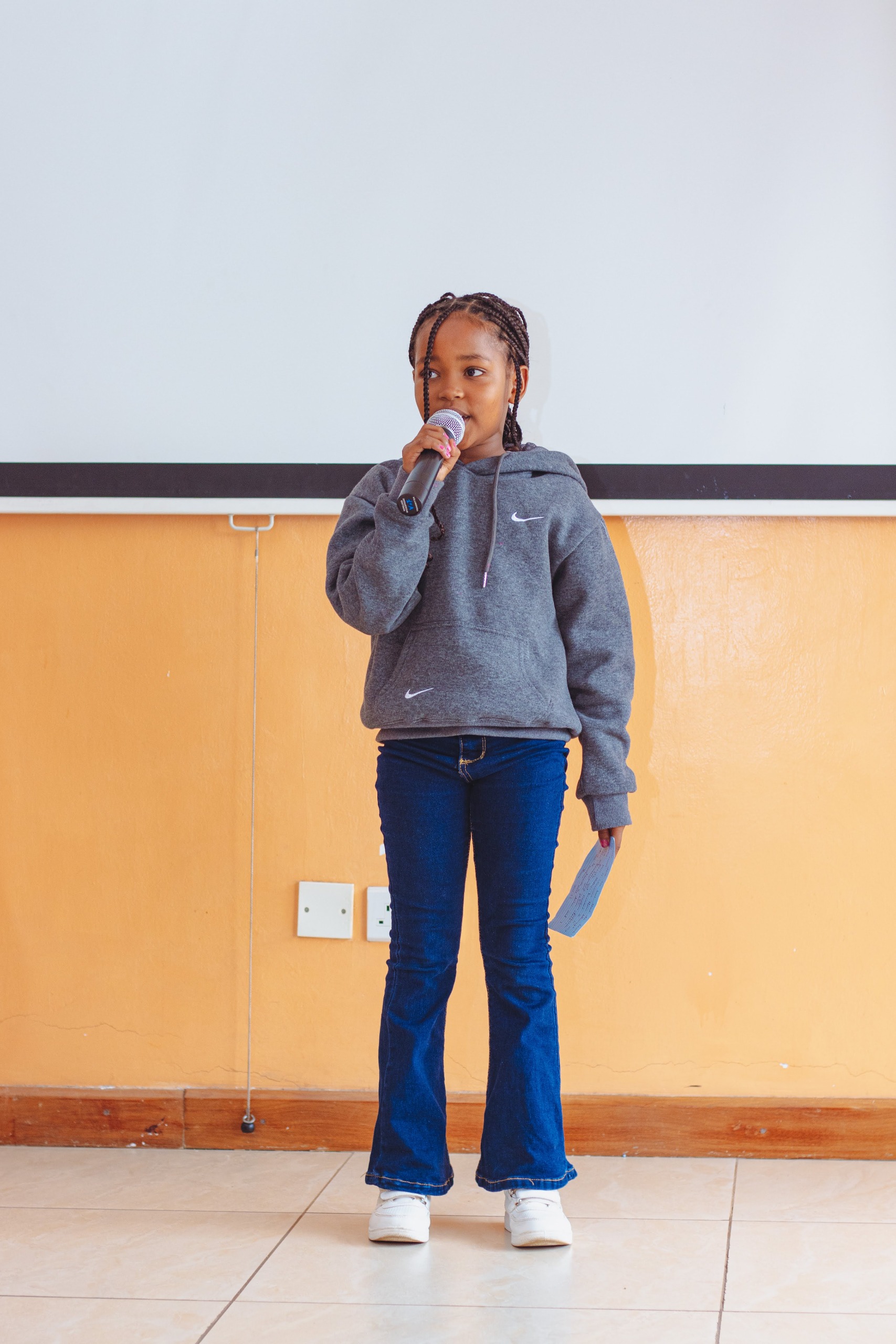
At Sprout, children practise the live communication skills that screens cannot teach and schools are not providing.
What Sprout Life Skills Does Differently
We exist because this gap is too wide and too consequential to leave unaddressed. And because the families we work with know that their child has more inside them than they are currently able to show the world.
Every programme at Sprout is built on the same three-pillar model we call the Sprout Model: Naturalness, Voice, and Words. We never teach a style. We never ask a child to become someone they are not. We build from who they already are and we teach them to say it out loud, clearly, confidently, and in a way that the room can feel.
For parents, we work with children from age 8, because that is when the foundation is laid. By the time most children reach 14 or 15, the belief that they are "just not a speaker" is already well established. We want to get to your child before that story sets.
For schools, NGOs, and youth organisations, we bring structured communication and personal development curriculum into your existing programmes. You do not need to start from scratch. You need the right partner, the right curriculum, and coaches who understand the African cultural context your children are growing up in.
We work in person at our Kilimani centre in Nairobi, and online across East Africa and beyond via SproutHub. If you want to have a conversation about what the right fit looks like for your child or your organisation, we are easy to reach.
FAQs: Communication Skills in Children Aged 8 to 17
Why can my child communicate well online but not in person?
Digital and live communication are fundamentally different skills. Online, your child has time to think, edit, and respond at their own pace. In person, they must think, speak, listen, and manage body language all at once. Children who have practised digital communication far more than live communication will naturally feel more comfortable online. This is a practice gap, not a personality trait, and it can be fixed.
At what age should I start working on my child's communication confidence?
As early as possible. By age 6 or 9, children are already forming beliefs about whether their voice is welcome and whether speaking up is safe. At Sprout, we work with children from age 8 precisely because this is when the foundation is built. The earlier you invest, the stronger the platform they stand on through the harder years of 11 to 17 and into adulthood.
My child's school does not teach public speaking. What can I do at home?
Start with consistent daily habits: dinner table conversations where each person shares something properly, weekly teach-back sessions where your child explains something to you, and a gradual communication ladder that starts with low-stakes live interaction and builds over weeks. These habits, done consistently, close the gap faster than most parents expect. A structured programme like Sprout's is the next level of support when you want professional coaching alongside what you are doing at home.
Is this a Nairobi-specific problem or does it affect children across Africa?
It is a continent-wide issue. Data from Ghana, Nigeria, Kenya, Uganda, Tanzania, and South Africa all point in the same direction: African children are leaving school without live communication skills, and African employers are feeling the consequences. Urban children face particular pressure because screen time is higher and informal outdoor socialisation is lower. But the communication gap exists in rural areas too, driven by cultural norms around children and speech, and school systems that do not assess verbal communication.
Does public speaking help with my child's overall confidence, or just speaking skills?
Both, and the research is consistent on this. A child who gains the ability to stand up, organise their thoughts, and express themselves clearly in front of others does not just become a better speaker. They develop a new story about who they are and what they are capable of. That self-concept shift carries into their academics, their friendships, their willingness to try new things, and their resilience when things go wrong. Communication confidence is foundational confidence.
Your Child Has Something to Say. They Just Need the Tools to Say It
The child who goes blank when called on in class is not a quiet child by nature. They are a child who has never had enough safe practice in live communication. The child who can argue eloquently in a WhatsApp thread but stumbles over a sentence face-to-face is not inconsistent. They are undertrained in one very specific, very important skill.
The good news is that this is one of the most fixable gaps in child development. Communication responds to practice faster than almost any other skill. Meaningful change is visible in weeks when the conditions are right, not years.
And the most important condition is the simplest one: a home where your child's voice is welcomed, expected, and celebrated. Start there. Start tonight.
Every confident speaker was once a child who stumbled over their words in a safe place and was encouraged to keep going. Be that safe place. Give them the floor. Ask a question. Then listen without interrupting.
If you want professional support in doing this work more deliberately, whether your child is 7 or 17, in a family or an organisation, Sprout Life Skills is here. Let us grow this together.
Coming Up From Sprout:
- Next week: Emotional intelligence what it actually means for a child between 6 and 17, and why EQ matters more than IQ for your child's future.
- Free resource: Our 10 Daily Habits for a Confident Child checklist (ages 6 to 17) is available now. Send HABITS via WhatsApp or Instagram DM to receive it directly.
- Parent partnership: We work with a small number of families each quarter. If you want personalised support for your child's communication and life skills development, reach out to us directly.
- Organisation partnership: If your NGO, school, or youth programme works with children aged 8 to 17 anywhere in Africa or globally, we are open to collaboration. Let us have a conversation.
Your Child's Voice Is Waiting to Be Heard
Our Complete Kids Public Speaking Course helps African children aged 6 to 17 build real communication confidence rooted in who they already are. In person in Nairobi. Online across Africa via SproutHub. Next cohort starting soon.
Complete Kids Public Speaking Course Try SproutHub OnlineResearch and Sources Referenced:
- Ghana Employers' Association Graduate Readiness Survey (2023)
- University of Lagos Career Readiness and Graduate Confidence Survey (2022)
- African Union Education Progress Report — Curriculum and Skills Gaps (2023)
- UNICEF Africa Digital Behaviour and Youth Identity Study (2023)
- East Africa Curriculum Development Survey - Teacher Observation Report (2023)
- National Institute of Mental Health, USA - Public Speaking Anxiety and Fear Survey (2022)
- Makerere University - Verbal Communication and Academic Performance Study (2023)
- African Development Bank - Youth Employment and Communication Skills Report (2023)
- UNICEF Africa - Post-Pandemic Adolescent Social Development Report (2023)