

Media Training for Political Candidates in Kenya: What It Covers and Why It Matters
A bad TV interview can undo months of campaign work. This guide covers what media training for political candidates in Kenya actually includes, how the Kenyan media landscape has changed heading into 2027, and the specific skills that hold up under hostile questioning.

- 01 Kenya’s media landscape in 2026
- 02 Why camera differs from stage or debate
- 03 What media training actually covers
- 04 5 camera-specific skills
- 05 Handling hostile journalist questions
- 06 The Live Broadcast Framework
- 07 What apps can and cannot do
- 08 Kenyan TV and radio formats to prepare for
- 09 Frequently asked questions
Most political aspirants in Kenya prepare for rallies and debates. Few prepare specifically for media. This is the gap that produces the interview moments campaigns spend weeks trying to recover from. Media training for political candidates in Kenya addresses a distinct set of skills from rally delivery or debate composure, and the Kenyan media landscape heading into 2027 makes this preparation more important, not less.
This guide explains what media training for political candidates in Kenya actually involves, what the current media landscape demands, and how to handle the specific pressures of a live Kenyan political interview.
What the Kenyan media landscape looks like for a political candidate in 2026
Before you can prepare for it, you need to understand what you are preparing for. The media environment a Kenyan political candidate faces in 2026 is different from 2022, and significantly different from 2017.
According to the Media Council of Kenya 2025 State of the Media Report, social media has officially overtaken television as the leading source of news for Kenyans, with 39% of Kenyans naming social platforms as their primary news source versus 31% for television and 21% for radio. This does not mean television has become irrelevant. It means a media appearance now travels further and faster than the broadcast itself.
When Citizen TV holds 56% of the television audience, more than the next eight stations combined, appearing on that platform means your words and your face are seen by a larger single audience than any other broadcast channel in the country. NTV holds 8%, followed by KTN Home and Inooro TV at 7% each. Prime-time viewing, between 7 PM and 10 PM, still captures 73% of daily viewers.
A clip from a hostile TV interview clips to WhatsApp and X within minutes of broadcast. A bad answer does not stay contained in the interview. It becomes the social media story. And 54% of Kenyans now believe the media is covering government fairly, up from 24% in 2024, which means the audience is more willing to take media coverage at face value. Media training for political candidates in Kenya must prepare for the broadcast and its digital afterlife simultaneously.
Why on-camera delivery is different from rally speaking and debate performance
This is the thing most aspirants do not realise until they see themselves on screen. The three main political communication contexts, a rally, a debate, and a media interview, each require genuinely different skills. Training for one does not prepare you for the others.
Research by Druckman (2003) examining how media format affects audience perception found that television increases viewer reliance on personality perceptions of candidates, while audio formats lead audiences to focus more on issues. The camera does not just transmit what you say. It amplifies how you are being, in ways that are invisible to the speaker but clearly visible to the viewer.
The key differences for a political candidate:
- Scale. A rally demands physical energy that projects over distance. A TV interview demands containment. The same energy that holds a crowd looks aggressive or manic on camera. The vocal presence that carries to the back of a baraza flattens through a microphone. Both directions of miscalibration are common and both are easily visible to the audience at home.
- Eye contact. At a rally, sweeping eye contact across a crowd signals presence. In a studio interview, eyes that move too much signal anxiety or evasion. Direct, steady eye contact with the interviewer is the standard, and it requires deliberate practice because it does not feel natural to most people under pressure.
- The camera’s relationship to truth. A studio camera held at head height creates the viewer’s experience of face-to-face contact. Research on political communication shows this close-up format creates a social bonding dynamic that means viewers at home form impressions of trustworthiness, likeability, and credibility from facial signals they are not consciously aware they are reading. A blink pattern. A jaw tightening. A momentary break in eye contact. All of these register below the level of conscious attention but above the level of no effect.
- Time structure. At a rally, you control the time. In a debate, you have a moderator’s rules. In a media interview, the journalist controls the tempo, the sequence, the re-asking of questions, and the right to interrupt. Media training for political candidates in Kenya specifically prepares for this loss of time control.
What media training for political candidates in Kenya actually covers
There is significant confusion in the market about what media training is. Some aspirants think it is about learning to sound professional on camera. Some think it is about managing their appearance or avoiding gaffes. Good media training for political candidates in Kenya covers something more specific and more demanding.
Genuine political media training covers:
- How on-camera delivery differs from all other communication settings, physically, vocally, and structurally
- Vocal calibration for studio environments, where the audio pickup is different from a rally or large room
- The specific body language signals that read as credible or as evasive on camera
- How to handle hostile, repeated, or leading questions from a trained interviewer
- Message discipline, maintaining a clear, consistent position without sounding scripted
- How to deliver a message within a time structure you do not control
- The Live Broadcast Framework for structuring any answer in any format
- How to manage the social media dimension of a broadcast appearance
What media training does not cover, and should not promise:
- It does not replace the communication foundation. An aspirant without a clear message, honest character, and genuine command of their subject matter will not be fixed by media technique. Technique amplifies what is already there. It cannot substitute for it.
- It does not produce a formula. The candidate who sounds most like themselves under pressure always outperforms the one who sounds coached.
Where Is Your Confidence Weakest Across Political Contexts?
Camera confidence and crowd confidence are different skills. Many aspirants are strong in one setting and significantly weaker in another without having a clear picture of the gap. The Confidence in Context Map shows your full political communication profile across rally, debate, media, small group, and hostile crowd settings. Use it before you decide which preparation to prioritise.
5 camera-specific communication skills media training builds
The voice that carries at a rally overloads a studio microphone. The voice used in private conversation sounds thin and unconvincing on camera. Media training for political candidates in Kenya teaches the specific volume, pace, and tonal register that the camera requires. Using the Four Vocal Tools from the Sprout Model, specifically volume and pace, with attention to the pause before a key point, builds the on-camera vocal range that reads as authority rather than anxiety.
In a studio interview, the primary eye contact target is the interviewer, not the camera, unless directly addressing the audience. Eyes that break to the side read as evasion. Eyes that look up read as fabrication to many viewers, regardless of whether the candidate is actually retrieving genuine memory. Physical composure, open posture, still hands, and a level chin, must be practised under conditions that simulate the pressure of a live interview.
The most common visible failure in political media interviews is the candidate who sounds like they are reciting a prepared position. The second most common is the candidate who forgets their position and rambles to fill time. Message discipline is the skill of knowing your position so clearly that you can express it in different words under different pressure in different formats, and still land on the same core point. This is built through repeated practice, not through memorising a script.
Unlike a debate, where timing is usually moderated, a journalist interview is controlled by the interviewer. They can interrupt, redirect, re-ask, and change the subject without warning. Media training for political candidates in Kenya develops the skill of completing a thought under interruption, redirecting a question without appearing to dodge, and knowing when to concede on a minor point to protect a major one. None of these come naturally. All of them are buildable.
The most important element of genuine media training for political candidates in Kenya is the video review component. No amount of coaching description can replace what a candidate sees when they watch themselves under simulated interview pressure. The facial expressions they do not know they are making. The voice change when a question is difficult. The physical collapse in posture when an argument is challenged. These are invisible in real time and visible on screen. Video review is the mirror that makes real improvement possible.
How to handle hostile questions from a Kenyan journalist
The Kenyan press corps is competitive, active, and increasingly trusted by the public. The Media Council of Kenya’s 2025 report found that 79% of Kenyans believe the media is doing a good job of holding power accountable. This is the context in which a political candidate appears for an interview. The journalist asking difficult questions has significant public credibility behind them.
This does not mean the journalist is adversarial in bad faith. Most Kenyan political journalists are doing the job the public expects them to do. Understanding this reframes what a hostile question actually is: not an attack to be deflected, but an accountability question the public has a right to hear answered.
The Objection Transformation Framework from the Sprout coaching model applies directly to hostile media questions. The structure is:
- Acknowledge. Name the concern in the question before answering it. “That’s an important question and it goes to the heart of…” This signals that you have heard it and are not afraid of it.
- Validate. Acknowledge any legitimate basis in the concern. This is not conceding the point. It is demonstrating intellectual honesty, which is itself a credibility signal.
- Reframe. Move the question toward the ground where you can answer it most clearly. “What I think is actually at stake here is…” This is not evasion. It is the skill of moving from the question as asked to the question that matters most.
- Address. Answer directly, concisely, with evidence where available. A long defensive answer signals the challenge has landed. A short, direct answer signals it has not.
- Invite. Where appropriate, close with a pivot to your strongest position. This is not a pivot away from the question. It is a bridge from the answer to your message.
The most damaging thing a political candidate can do in a hostile interview is to fight the premise of the question out loud. Arguing that a question is unfair, biased, or loaded, while in the interview, does not help your position with the viewer at home. It reads as avoidance. If the premise of a question is wrong, correct it briefly, clearly, and without appearing threatened. Then answer the question underneath.
The Live Broadcast Framework for any political media appearance
Most political media appearances, whether a studio interview, a live phone-in, or a press conference doorstep, share one structural demand: the candidate must deliver a clear, complete message in a very short window, often 60 to 90 seconds per answer, while under pressure from a journalist who may not be cooperating with their narrative.
The Live Broadcast Framework is a three-part structure that works across any format:
Hook / One Point / Clear Close
The first sentence of any answer is the one the viewer and the journalist remember. Lead with the most important thing you want to say, not with context or background. “The question of [topic] matters because it affects every family in this constituency who…” Land your main point in the first 10 seconds, then support it.
One clear, well-supported point per answer. Not two. Not three. The temptation in a live political interview is to address every aspect of a complex issue. This produces an answer that the audience cannot follow and the journalist can interrupt at any moment. One point, explained clearly, supported by one piece of evidence or example, is more effective than three points half-made.
End with a commitment or a direct statement, not with a qualification or a trailing thought. “That is why we are committed to…” or “The evidence points clearly to…” A strong close signals that you have finished your answer and that you are confident in what you have said. It also gives the journalist a natural place to move to the next question, which prevents the interview from feeling combative.
What apps can and cannot do for political media preparation
The query “top apps for improving political public speaking skills used by Kenyan politicians” is a real question that real aspirants are searching. It deserves a direct answer.
Apps can genuinely help with certain elements of media preparation. Teleprompter apps help with message fluency. Recording apps allow self-review of delivery. AI-based feedback tools can give data on vocal pace and filler word frequency. These are real tools with real uses.
Apps cannot replicate what media training for political candidates in Kenya specifically builds:
- They cannot simulate the live pressure of a hostile interview with a trained journalist who has done their research
- They cannot provide the calibrated human feedback that reveals patterns the candidate cannot see from the inside
- They cannot build the composure reflex that holds under unexpected or unfair questions
- They cannot review the full physical signal, not just the verbal content, under actual interview conditions
Use apps for practice between sessions. Do not use them as a substitute for structured preparation with a coach who knows what political media in Kenya actually demands.
The Kenyan TV and radio formats a political candidate needs to prepare for
Not all media formats make the same demands. Effective media training for political candidates in Kenya prepares specifically for the formats the candidate will actually face.
Prime-time Citizen TV interview
The highest-stakes format. 56% audience share. The interview is likely brief, live or recorded for prime time, and the journalist will have prepared questions on your most exposed positions. The audience is Kenya’s broadest cross-section. Answers must be accessible, direct, and quotable in one sentence for social media.
NTV, KTN Home, or Inooro TV interview
Different audience profiles. NTV at 8% and KTN at 7% attract audiences with somewhat different regional and demographic compositions. Inooro TV’s audience is predominantly Kikuyu-speaking. Understanding which station the appearance is on changes the calibration of message, tone, and the use of vernacular.
Radio interview (Citizen Radio, Radio Maisha, Radio Jambo)
Radio removes the visual dimension entirely. The audience is hearing only your voice and your words. Vocal clarity, pace, and the pauses that signal confidence become even more critical. Radio audiences also tend to be more dispersed geographically and include significant rural listenership. Message simplicity matters more, not less.
Press conference or doorstep interview
Multiple journalists, multiple cameras, simultaneous questions. The doorstep is the format where the most damaging clips are produced. There is no moderator, no structure, and no control over who asks next. Preparation for this format specifically includes practising the discipline of staying on message when questions are coming from multiple directions.
Social media live
Increasingly, political candidates are conducting direct-to-audience broadcasts on Facebook Live, YouTube, and X. These are simultaneously the most accessible and most unforgiving format, because they are unedited, direct, and permanently recorded. The rules of composure, message discipline, and the Live Broadcast Framework apply here as directly as in any studio.
Media preparation built into political communication coaching
The Becoming an Effective Political Speaker programme at Sprout Life Skills dedicates two sessions specifically to media training for political candidates in Kenya. Sessions 5 and 6 cover on-camera delivery, hostile interview technique, the Live Broadcast Framework, and video-based self-review under simulated interview conditions. Combined with the four foundational sessions on voice, naturalness, and political message framing, this is the most complete political communication preparation available in Kenya before 2027.
Learn more about the programmeMedia training for political candidates in Kenya is not about managing your image. It is about ensuring that when the camera is on you, under hostile questioning, the person it shows is the person you actually are, at their best, under pressure. Citizen TV’s 56% audience share means that one interview can reach more Kenyans than a week of rallies. Prepare accordingly.
What Is Suppressing Your On-Camera Voice?
The voice that works at a rally rarely arrives unchanged on camera. If on-camera delivery is your specific gap, the Voice Suppressor Self-Check identifies which of the Five Vocal Suppressors is most active for you under pressure. Knowing the suppressor tells you what to work on, which changes what you practise.
Frequently asked questions about media training for political candidates in Kenya
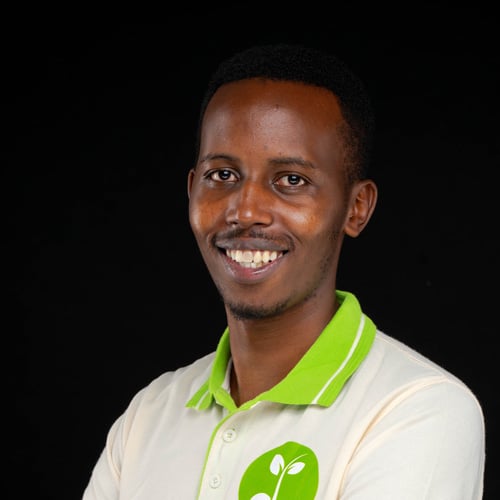
Gikuyu Muchai
Gikuyu Muchai is Kenya’s leading public speaking coach and the founder of Sprout Life Skills. For over nine years he has coached professionals, executives, and political aspirants. He designed the Becoming an Effective Political Speaker programme, including its media preparation sessions, specifically for the demands of the Kenyan political context in the 2027 election cycle.
Read full bio · Becoming an Effective Political Speaker · Executive Coaching
Sources and further reading
- Media Council of Kenya (2025). State of the Media Survey Report 2025. Released at World Press Freedom Day 2026, Strathmore University. mediacouncil.or.ke
- Druckman, J. N. (2003). The power of television images: the first Kennedy-Nixon debate revisited. Journal of Politics, 65(2), 559-571. View paper
- Citizen Digital (2026). Citizen TV maintains dominance as Kenya’s most-watched station. View article
- Vantage Ke (2026). Social media overtakes TV as Kenya’s main source of news: Media Council Report. View article
- Techweez (2026). Social media overtakes TV as Kenya’s top news source in 2025. View article