
Shy children grow as public speakers in small, visible steps: first they watch, then they speak to one person, then to a small group, and later they volunteer to speak in front of a class or an audience. The change is usually gradual, and it grows fastest when a child practices regularly with patient adults and other children who feel nervous too. This guide describes eight signs of growth parents can look for, and how to support each one at home.
Key points
- Shyness is a temperament, and a shy child can become a clear, confident speaker while staying thoughtful and calm.
- Shy children usually grow as speakers in steps, from watching, to speaking with one person, to speaking with a group.
- Each small step, such as answering one question in a group, is progress worth noticing and describing.
- Practicing with other children who also feel nervous helps shy children feel less alone.
- Public speaking practice supports clearer communication, organized thinking and easier friendships.
Can a shy child become a confident public speaker?
Yes, a shy child can become a confident public speaker, because speaking in front of others is a skill that grows with practice. Shyness describes how a child feels in new or busy situations. It does not decide how well they can speak once they feel safe and prepared.
A shy child does not need to become loud. In Sprout’s coaching experience, many shy children become careful, thoughtful speakers whom others listen to closely. Sprout’s practice-based framework starts with Naturalness: the child speaks like themselves, and nobody asks them to copy a more outgoing speaker.
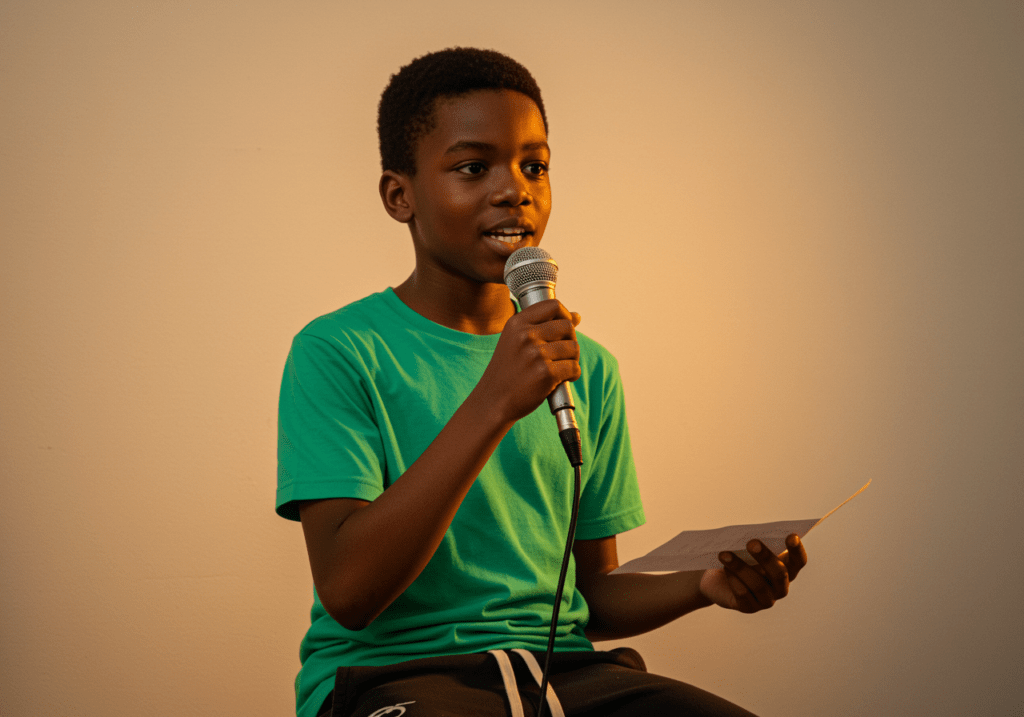
8 signs a shy child is growing as a speaker
These steps come from Sprout Life Skills’ practice-based coaching with children aged 6 to 17. Children move through them at their own pace, and some skip or repeat steps.
1. They watch closely and stay in the group
A shy child who stays with the group and watches closely is already taking part. Watching is how many careful children learn what is expected before they try it themselves.
Try this: after an event, ask your child what they noticed. “What did the other children talk about?” lets them share without the spotlight.
2. They talk with one trusted person
Speaking with one partner is often the first speaking step for a shy child. One listener feels much safer than a group, and it gives the child a chance to hear their own ideas out loud.
3. They join games that involve speaking
Games make speaking feel like play, so shy children often speak in a game before they speak in a formal task. Word games, guessing games and storytelling games all count.
4. They answer short questions in a small group
Answering a short question in a small group shows a shy child they can be heard by several people at once. A one-word or one-sentence answer is a full step forward.
Try this: at family meals, ask everyone the same easy question, such as “What was the best part of your day?” so your child’s turn feels normal.
5. They tell a short story or explain something they know
Telling a short story or explaining a favorite topic shows a child they can hold listeners’ attention for a little longer. Topics they love, such as an animal, a game or a place, make this easier.
6. They speak to a group with some preparation
Giving a prepared short talk to a group is a big step for a shy child. Preparation helps: knowing the main point and the first two lines well makes the start feel calmer.
7. They volunteer without being asked
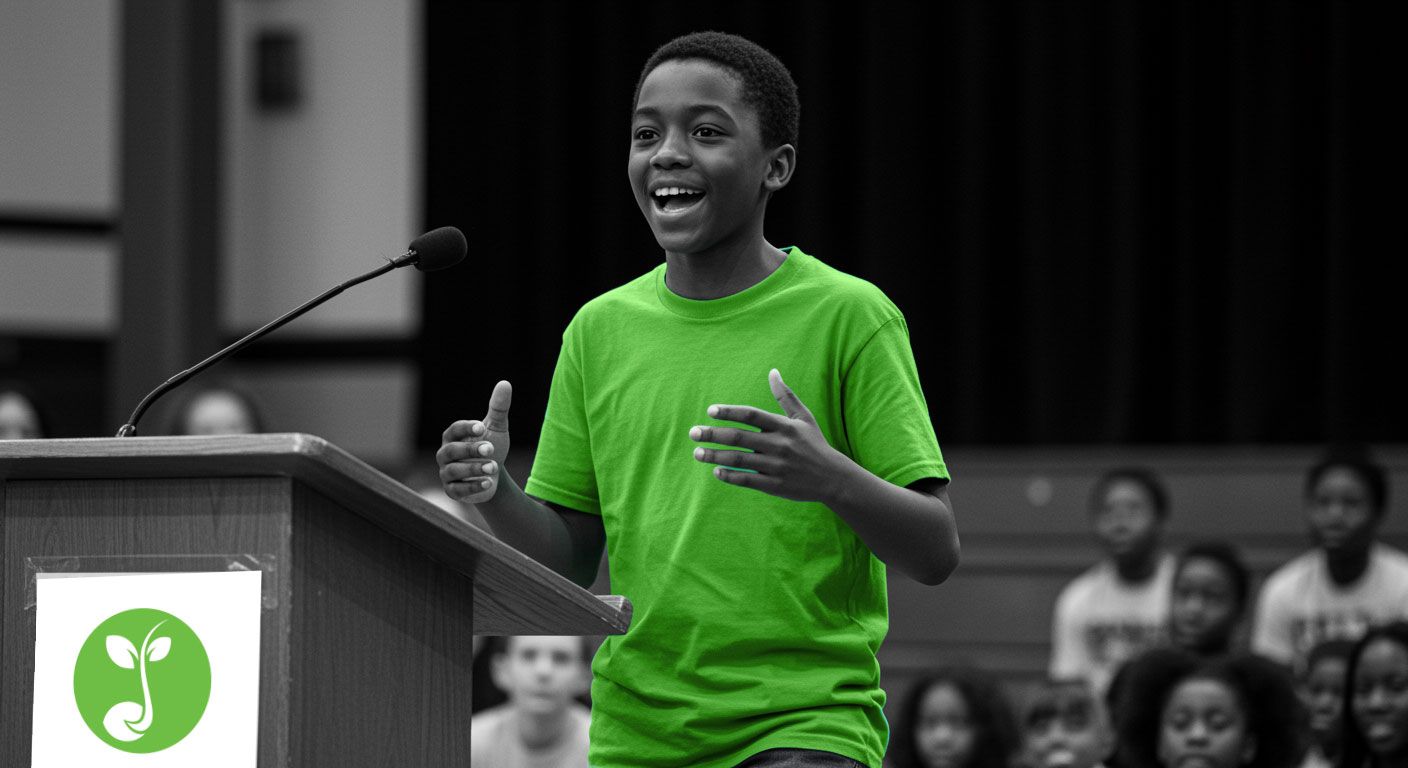
Volunteering to answer, read or present is a clear sign a shy child feels safer speaking. It often appears first in a familiar setting, such as their own class or a weekly group, before it appears elsewhere.
8. They encourage other children
A child who once felt shy often notices and encourages other nervous children. Cheering for a classmate, or offering to go first, shows a child who now sees speaking as something they can share.

What helps shy children grow as speakers?
Shy children grow as speakers when they feel safe, practice often, and hear specific encouragement. These five things help most:
- A supportive group. Children who practice alongside others who also feel nervous often feel more at ease, and they cheer each other on.
- Small steps. Speaking to a partner, then a small group, then a class lets each success become the base for the next.
- Specific feedback. “You looked up when you said your main point” gives a child something to repeat; “Good job” does not.
- Time to think. Waiting a few seconds for an answer tells a careful child their thinking is welcome.
- Topics they care about. Children speak more easily about things they love.
Why does public speaking matter for shy children?
Public speaking practice helps shy children share ideas clearly, think in an organized way, and connect with others. These are the four benefits parents most often notice:
- Clearer communication. Children learn to say their main point and explain it so others can follow.
- More confidence. Each time a child speaks and is heard, they gain evidence that they can do it again.
- Organized thinking. Planning a short talk teaches children to put ideas in order.
- Easier friendships. Children who are used to speaking in a group often find it easier to join conversations. Read more in our guide to personal development skills for kids and teens.
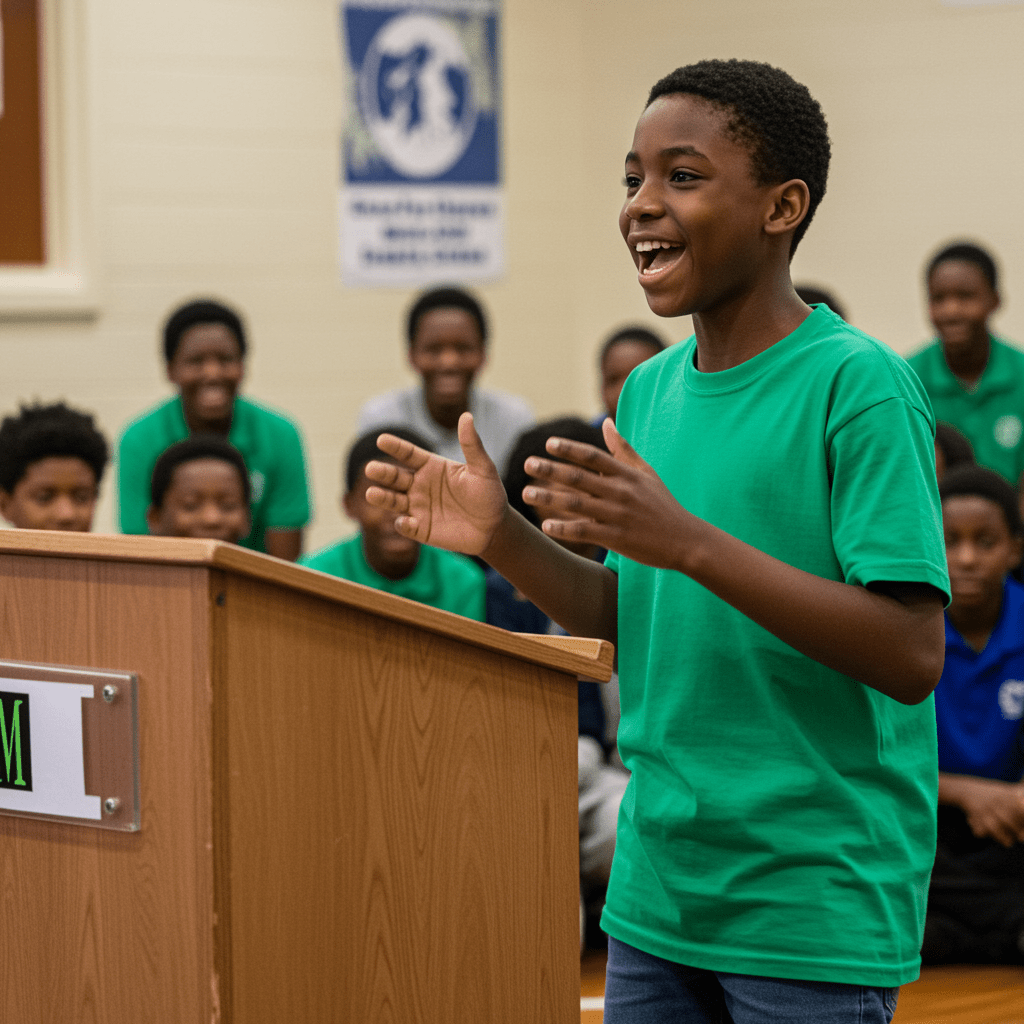
How can parents support a shy child at home?
Parents can support a shy child by creating short, relaxed speaking moments at home and noticing every small step. Ask open questions, let your child finish without interruptions, and describe what they did well. Avoid labeling them “the shy one” in front of others, because children often live up to the labels they hear.
For regular practice with other children, Sprout runs Saturday public speaking classes for ages 6 to 17, in person in Kilimani or online, with up to 12 children per age group. For a child who prefers one-to-one attention, home coaching follows the same approach.
If your child’s shyness stops them from going to school, making any friends, or speaking at all in places where they used to speak, talk to a doctor or counselor first.
Frequently asked questions about shy children and public speaking
Is shyness in children something to worry about?
Shyness in children is usually not something to worry about; it is a common temperament. Speak to a doctor or counselor if shyness stops your child from going to school, making friends or speaking at all in familiar places.
How can I help my shy child speak in front of others?
You can help your shy child speak in front of others by starting with one listener, then slowly growing the audience, giving them time to think, and describing specifically what they did well each time.
Will public speaking classes change my child’s personality?
Public speaking classes do not change a child’s personality. In Sprout’s coaching, a shy child stays themselves and learns to share their ideas clearly when they choose to.
At what age can shy children start public speaking practice?
Shy children can start public speaking practice at any age with activities that suit them. Sprout’s programs start at age 6, with games and short stories for younger children and longer talks for teens.
How do I know my shy child is making progress?
You know your shy child is making progress when you see small new steps, such as speaking to a new person, answering a question in a group, or volunteering to read. Progress is gradual, so compare your child with their own past, never with other children.