

You've Seen the Spark
At home, your child tells detailed stories about their day. They ask questions that surprise you. They remember facts from documentaries and can explain complicated ideas in their own words.
But when the teacher asks a question in class, their hand stays down.
During family gatherings, they go quiet. At parent-teacher meetings, you hear the same line: "They're very bright, but they need to participate more."
You know they're smart. So what's really going on?
Intelligence and Speaking Confidence Are Two Different Skills
Here's something that surprises many parents. Being intelligent and being confident enough to speak are not the same thing.
Your child might understand the lesson perfectly. They might even have the best answer in the room. But if they don't feel safe or confident enough to share it, that brilliance stays hidden.
What Research Says About Children, Confidence, and Communication
A child's willingness to speak is shaped by emotional safety, environment, and learned confidence, not intelligence alone. Leading global institutions agree that communication confidence develops through practice and support.
-
American Psychological Association (APA)
The APA explains how confidence, self-expression, and emotional development evolve in children and how supportive environments strengthen communication skills.
-
Harvard University – Center on the Developing Child
Harvard research highlights how safe, responsive interactions help children build the confidence needed to express ideas and speak up.
-
UNICEF – Child Development & Parenting
UNICEF emphasizes that communication skills grow when children feel heard, encouraged, and emotionally supported at home and school.
Think of it like this. Your child might be excellent at playing piano at home. But performing in front of an audience requires a completely different skill. Public speaking works the same way.
Why Smart Children Stay Quiet
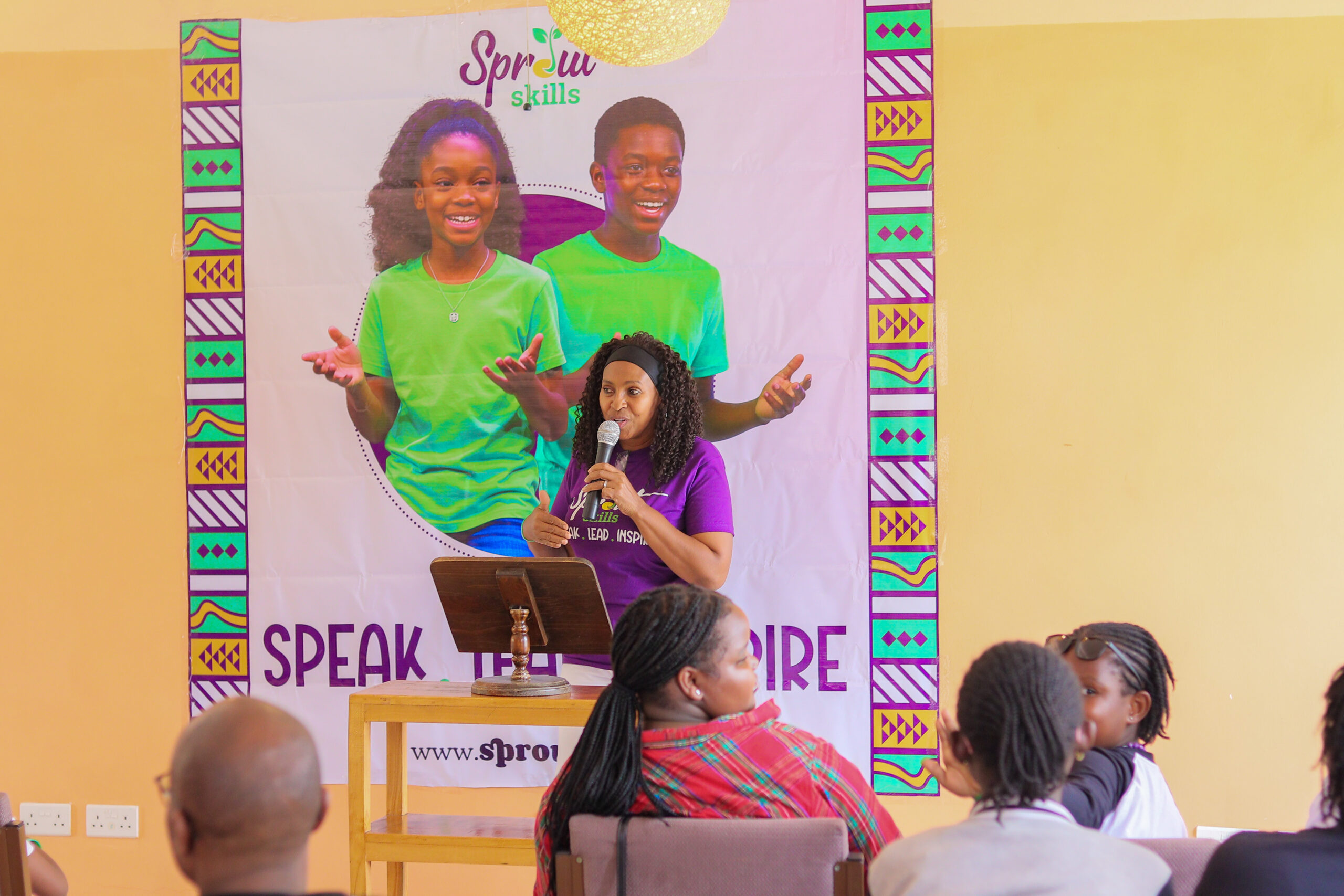
Here children are gently guided to express their ideas, speak with clarity, and build confidence in a safe, encouraging space, surrounded by supportive coaches and parents.
There are many reasons a bright child might hold back. None of them mean there's something wrong with your child. Understanding these reasons helps you support them better.
They're Perfectionists
Smart children often set very high standards for themselves. They want their answer to be perfect before they say it out loud. So they stay quiet, replaying the words in their head, worried it won't come out right.
They Fear Judgment
Children are deeply aware of how others see them. One small laugh from a classmate. One dismissive look. That's all it takes for a child to decide it's safer to stay silent.
They Process Differently
Some children need time to think before they speak. By the time they've organized their thoughts, the class has moved on. It's not that they don't know the answer. They just need a bit more time.
"My daughter Aisha is top of her class in exams. But during oral presentations, she freezes. I used to think she was just shy. Now I realize she's terrified of making a mistake in front of others."
Grace, Parent from Nairobi
They Haven't Practiced in a Safe Space
Speaking in front of people is a skill that requires practice. If a child hasn't had opportunities to practice in a low-pressure, supportive environment, even simple things like answering a question can feel overwhelming.
They're Observing, Not Participating
Some children are natural observers. They learn by watching and listening. In a classroom that rewards quick responses, these children can feel left behind, even though they're absorbing everything.
What Silence Is Really Saying
When your child stays quiet, it's not laziness. It's not lack of intelligence. It's communication.
Silence often says, "I don't feel safe enough to try."
It says, "I'm worried about getting it wrong."
It says, "I need more time, but no one's giving it to me."
Your child isn't choosing to hold back their brilliance. They're protecting themselves from what feels like risk.
And here's the good news. Once a child learns that speaking up doesn't equal danger, everything changes.
Confidence Is a Skill, Not a Personality Trait
Many parents believe their child is "just shy" or "naturally quiet." And while temperament plays a role, confidence is something that can be built.
You weren't born knowing how to ride a bike. You learned. You practiced. You fell. You tried again.
Speaking confidence works exactly the same way.
With the right environment, the right encouragement, and the right practice, your child can learn to speak up without fear. They can learn to share their ideas clearly. They can learn to feel proud of their voice instead of hiding it.
It doesn't happen overnight. But it does happen.
What You Can Do at Home
You don't need to be a professional coach to help your child build confidence. Small, consistent actions at home create a foundation for growth.
- Create speaking moments without pressure. Ask your child to explain their favorite subject at dinner. Let them tell a story about their day. No corrections. No interruptions. Just listening.
- Celebrate effort, not perfection. When your child shares something, acknowledge their courage. "I love that you shared that idea" means more than "That's the right answer."
- Normalize mistakes. Share your own speaking mistakes. Laugh about them. Show your child that stumbling over words or forgetting a point is normal and fixable.
- Give them time to think. Don't rush them when they're formulating an answer. Silence while thinking is not the same as silence from fear.
- Practice in safe, small settings. Let them present a school project to just you first. Then add a sibling. Then a grandparent. Build up gradually.
- Ask open-ended questions. Instead of "Did you have a good day?" try "What was the most interesting thing that happened today?" It invites longer, more confident responses.
These small moments add up. Over time, your child begins to associate speaking with safety instead of fear.
Ready to See Your Child Speak With Confidence?
Explore our child-focused public speaking programs designed for kids aged 7 to 14
When Structured Coaching Becomes Helpful
Home practice is powerful. But sometimes, children need a dedicated space designed specifically for building speaking confidence.
That's where structured coaching becomes valuable.
In a coaching environment, children practice speaking in front of others without the pressure of grades or judgment. They learn techniques for managing nerves. They get feedback that builds them up instead of tearing them down.
Most importantly, they meet other children who are on the same journey. They realize they're not the only one who feels nervous. That alone can be life changing.
What to Look for in a Program
- Emotional safety first. The program should prioritize making children feel safe before asking them to perform.
- Age-appropriate content. Younger children need different approaches than teenagers.
- Small group sizes. Your child needs individual attention, not to be one of thirty kids in a room.
- Focus on growth, not perfection. Programs that celebrate progress, not just polished speeches, create lasting confidence.
- Trained facilitators. Adults leading the sessions should understand child psychology, not just public speaking techniques.
Why Sprout Life Skills Works for Quiet but Capable Children
At Sprout Life Skills, we work with children aged 7 to 14 who are exactly like your child. Bright. Thoughtful. Full of potential. Just a bit hesitant to let it show.
We don't push children to speak before they're ready. We create the conditions where they want to.
Here's How We Do It
We start with emotional safety. Before any child speaks in front of the group, we build trust. We use games, storytelling, and collaborative activities so children feel comfortable first.
We teach skills in small steps. We don't throw children into presentations on day one. We start with speaking to a partner. Then a small group. Then the whole class. Gradual. Gentle. Effective.
We celebrate courage, not perfection. Every child gets positive feedback. We highlight what they did well, not what they got wrong. Mistakes become learning moments, not failures.
We keep groups small. Your child gets individual attention. They're not lost in a crowd.
We work with parents. You get insights into what your child is working on and how to support them at home. We're partners in their growth.
"My son Brian used to hide behind me at family events. After just a few weeks at Sprout, he volunteered to read a scripture at church. I almost cried. He was so proud of himself."
Mary, Parent from Kiambu
We've seen children who couldn't make eye contact grow into kids who lead school assemblies. We've watched quiet observers become confident presenters.
Not because we forced them. But because we gave them the right environment to grow.
Your Child's Voice Matters
Give them the space to discover it
A Final Word for Parents
If you're reading this, you already care deeply about your child's growth. You've noticed their potential. You've seen the gap between what they know and what they're willing to share.
That awareness is the first step.
Your child is not broken. They don't need fixing. They need support, patience, and the right opportunities to practice in a safe space.
Confidence doesn't appear overnight. It grows quietly, through small moments of courage. A raised hand. A shared idea. A presentation that goes better than expected.
With the right environment, your child will find their voice. And when they do, you'll see the brilliant, capable person you've always known they were, finally ready to let the world see it too.
You don't have to do this alone. We're here to help.
Sprout Life Skills
Building confident, capable communicators, one child at a time